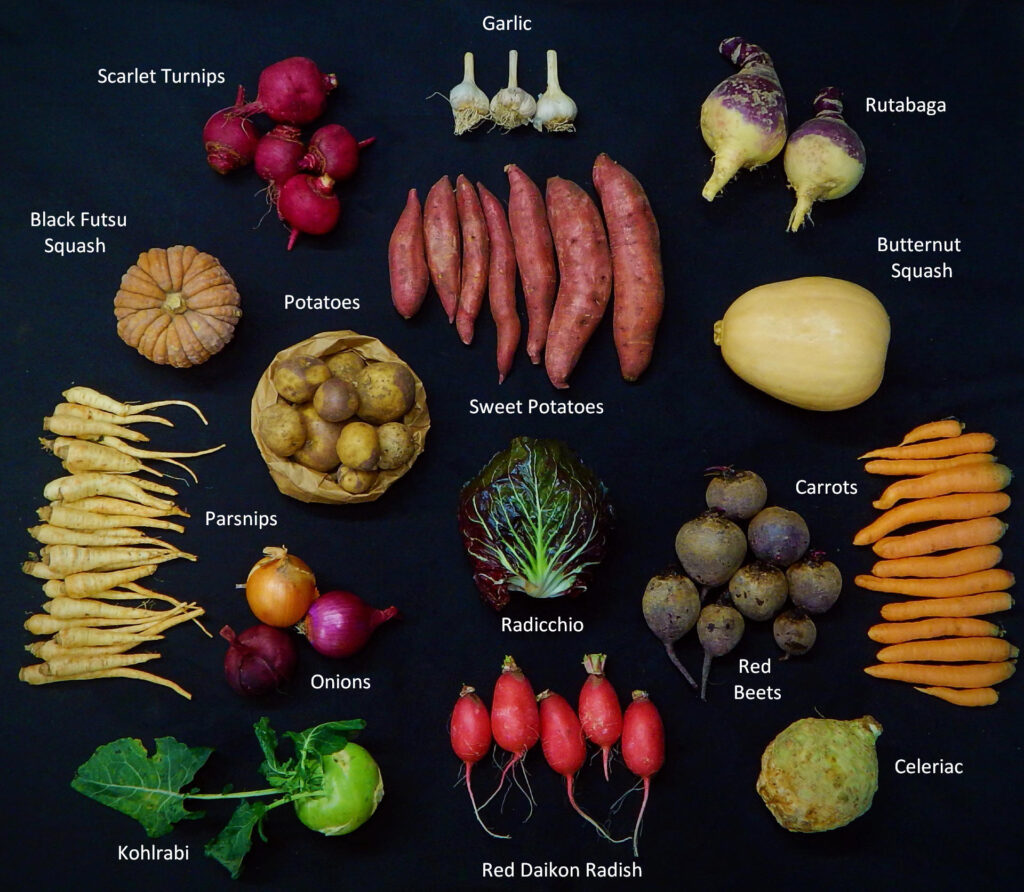
What’s In The Box with Recipe Suggestions
Red Beets: Beets should also be stored in the refrigerator in a plastic bag or other closed container to keep them from dehydrating. It’s not uncommon to see a little mold start to form on the stem end when kept for a while. This is normal and typically does not affect the beet. Just scrub them well and trim away the stem end.
Baking with Beets: 5 Surprisingly Delicious Recipes
Chocolate Beet Cupcakes with Maple Cream Cheese Frosting
Orange Carrots: Carrots are delicious in cake, but what about pie? Check out this week’s link to a Chai Carrot Pie recipe!
Celeriac: If you find celeriac intimidating, you can put it in the swap box for someone else to enjoy, but I do hope you’ll reconsider and give it a try. To make it easier to peel, cut it into quarters or even eighths. Smaller pieces are more manageable to peel with a paring knife. Celeriac makes a silky smooth, delicate soup, or feed the pieces through your food processor with a shredder attachment and you can turn it into a tasty creamy slaw in 10 minutes! You may notice some small black spots near the bottom portion of your celeriac. These spots are minimal, going an inch or less into the celeriac. They can easily be cut out and around.
Braised Chicken with Celeriac & Garlic
Italian and Porcelain Garlic: Include a little garlic in your meals each day and you’ll be giving your immune system a little extra protection from winter colds.
Ethiopian Spiced Cabbage, Carrots & Potatoes
Kohlrabi: These kohlrabies are a little different than the kohlrabi we grew for our early June boxes. This variety is a storage variety intended to keep in cold storage for months! You’ll find the flesh to be crispy, juicy, sweet and delicious! Use it to make tasty winter slaws along with apples, other root vegetables, etc. You can also use it in stir-fry, soups and stews, or roast it along with potatoes, carrots, etc. Store it in the refrigerator and peel it before using it.
Sage Brown Butter Kohlrabi Noodles
Red & Yellow Onions: Onions keep best if stored in a cool, dry environment out of direct sunlight. Of course, if you don’t want to store them you could always make French Onion Soup or an Onion Tart.
Ethiopian Spiced Cabbage, Carrots & Potatoes
Carrot Pizza with Fontina & Red Onion
Parsnips: Parsnips are another root vegetable we, as Midwesterners, store and eat through the winter months.
Parsnip Oatmeal Chocolate Cherry Cookies
Autumn Root Vegetable Gratin with Herbs and Cheese
Masquerade or Purple Viking Potatoes: Masquerade potatoes have a bicolored skin that has a golden yellow base and is covered in dominant spots of purple and violet. The flesh is pale yellow to light gold and is firm, dense, and moist. When cooked, Masquerade potatoes offer a creamy and buttery flavor and are best suited for roasting, baking, boiling, mashing, steaming, frying, or sautéing. Purple Viking is considered to be an “all-purpose” potato. It has dark purple skin that has splashes of pink with white flesh. This potato can be used for pretty much anything from soups, fries or even mashed potatoes!
Autumn Root Vegetable Gratin with Herbs and Cheese
Red Daikon Radishes: A little red daikon radish will add a splash of color and vibrance to your winter meals! Turn them into pickles to enjoy throughout the winter as a condiment or incorporate them into winter stir-fries, slaws and salads. Store them in the refrigerator loosely wrapped in a plastic bag to keep them from dehydrating.
Vietnamese Pork Bahn-Mi Sandwiches
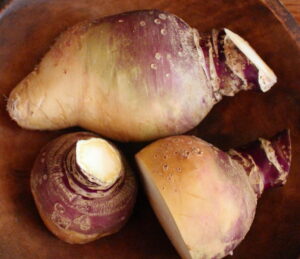
Rutabaga: This is the roundish vegetable with buttery yellow skin and purple shoulders. It is also this week’s featured vegetable and is one of the stars of our main article in this week’s newsletter! Take a minute to read a little more about this underappreciated root and check out the featured recipes!
Sweet Potatoes: This week’s sweet potato variety is Bayou Belle, known for its dark orange flesh and pinkish skin. The optimal storage temperature for sweet potatoes is 55-65°F. If you don’t have an environment at that temperature, we recommend storing them at room temperature in your home. Do not refrigerate them and be careful if storing them in a garage as the temperature may drop too low in the winter.
Sweet Potato Bread with Dates & Cranberries
The Best Sweet Potato Cheesecake
Scarlet Turnips: You may notice some black spots on the skin, but don’t worry, like beauty it is only skin deep. Peel or cut away those spots to reveal rosy, white flesh that is mild and sweet. They are tasty when roasted but also a great stir-fry vegetable or may be added to any vegetable soup or stew. Not sold on turnips. We encourage you to give this one a try.
Chicken Pot Pie with Biscuit Topping
Black Futsu Squash: This is a Japanese heirloom variety of winter squash, but in Japan they use the term “pumpkin” interchangeably with “winter squash.” If you are not familiar with this variety, read our vegetable feature article
Pumpkin Goat Cheese Dip with Caramelized Onions
Pumpkin Baked Oatmeal with Maple and Pecans
Butternut Squash: This week you will receive one of our 3 varieties: Butterscotch, Ceres or Granite, all very good varieties. Butternut squash is one of the most versatile varieties. It’s good in baked goods, curries, soup and simply baked or roasted. You will notice there are some wrinkles in your butternut squash this week, but don’t think it is bad. We have cut multiple open and they have all been solid and taste wonderful. As such though, you may want to eat these sooner rather than later this winter.
Butternut Squash and Sweet Potato Soup
Root Vegetable Gratin with Gruyere
Radicchio or Lacinato Kale Tops: Radicchio is spectacularly deep red with bright white mid-ribs. It is considered bitter and recommended for grilling, roasting or sautéing. The Lacinato Kale tops have been through some very cold nights and were totally frozen. The result—excellent, sweet flavor!
16 Stellar Ways To Use Radicchio
Vegetable Feature: Rutabagas

As we move into the winter months, we start shifting our diets from eating fresh vegetables right from the field and turn to foods that store well. This is in preparation for the long, cold months we stock our root cellars full of vegetables that can survive the winter. Not many people these days have a root cellar, but you can use your crisper drawer for a similar purpose! Rutabagas are one of the best storing root crops.
When you are ready to use your rutabagas, trim off the top neck portion. Cut the vegetable lengthwise in halves or quarters so it is more manageable to handle. Trim off the exterior skin using a paring knife. You’ll find the flesh to be a beautiful golden color, firm and crisp. When cooking rutabagas, less is often more. Don’t try to make rutabagas fancy, that’s just not their style. If you overcook rutabagas, they will quickly go from tender, sweet and delicious to mushy, strong flavored and stinky. Rutabagas are also often used in soups, gratins, roasted root mixes, and root mashes, but can also make a really nice winter salad or stir-fry. Rutabagas pair well with butter & cream, ginger, lemon, nutmeg, parsley, sage, thyme, apples, pears, other root vegetables, bacon and other smoked and roasted meats.
Rutabagas should be stored in a cold environment with moisture to keep them from dehydrating. If stored properly they can be preserved for months. If you notice your roots starting to get floppy or soft, just soak them in a bowl of water in your refrigerator and they’ll spring back to life. Don’t let them shrivel up in the crisper drawer this year, give them a try! You just might find you like them and will miss them come spring!
Short & Sweet Weekly Farm Update
Ready or not – winter is here! We had to shift form cutting wood to removing a bunch of snow from our employee parking area, roads and even our greenhouses. We still have some radicchio in the field, hooped and double covered with our row covers. Now it also has a warm blanket of snow too! We are hoping for a warm day in the near future so we can get into the field to harvest it!
We say ‘See you next spring’ to more of our crew (family) this week. And we can tell you that some of them are happy to see the snow, but even happier to be leaving for warmer weather! Maybe some part of us all would like to seek warmer weather for the winter.