What’s In The Box with Recipe Suggestions
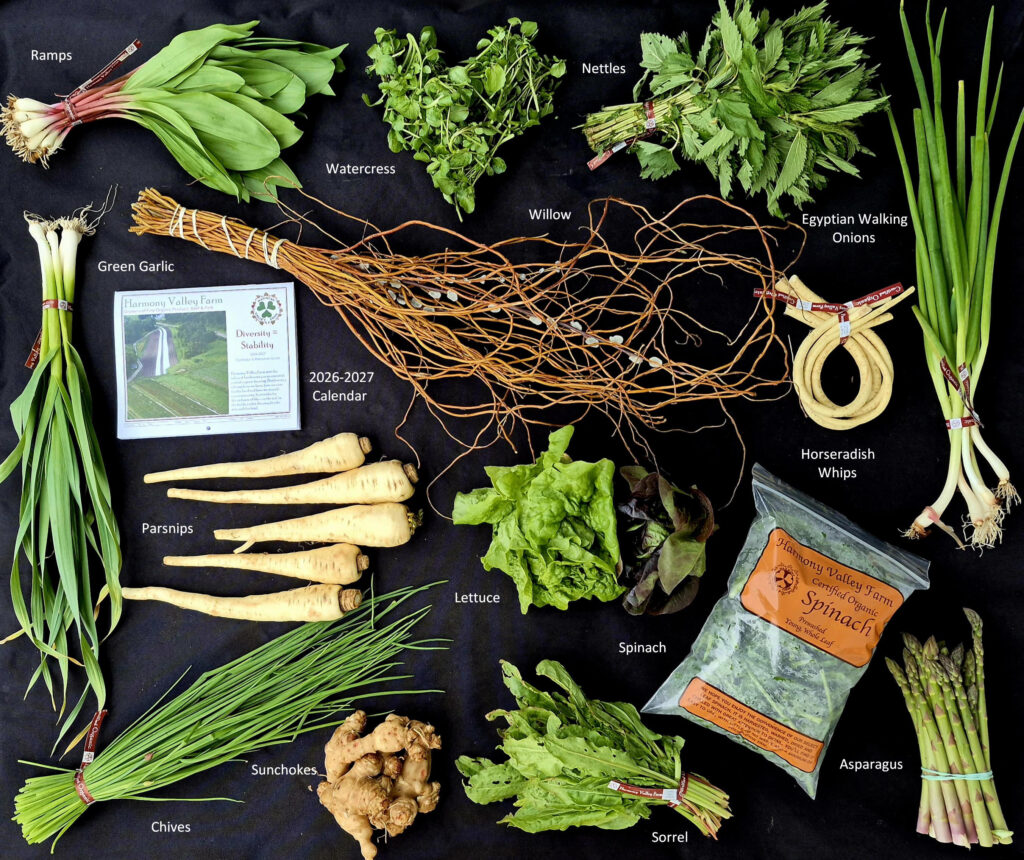
Asparagus: This week we packed one bunch of asparagus in your box; fingers crossed for more to come in the next few weeks. Enjoy asparagus in soups, stir-fry, quiche, or simply roasted. The bottom of the spear may be a bit tough. Just trim this portion away and use the remainder. Save the lower portions of the spear that are more tough and use them to make a tasty pot of soup or vegetable broth! To store, place asparagus upright with the base of the stalks in cool fresh water in the refrigerator.
Asparagus and Chicken Stir-Fry
Asparagus with Creamy Ramp Goat Cheese Sauce
Chives: We strive to include a member of the onion family in every CSA box starting with chives! Chives are often used as a garnish to add a pop of flavor to salads, soup and other dishes. You may also choose to blend them into oil and use the chive oil as a garnish. If you have more chives than you will use this week, chop them and dehydrate them in a very low heat oven or food dehydrator and use them later in the year!
Grilled Potatoes with Chive Sauce
Green Garlic: This is immature garlic, harvested before it starts to form a bulb at the base. Green garlic resembles a scallion or green onion, but you can tell the difference by looking at the green tops. Green garlic has flat leaves/green tops while green onions or scallions have round tops. The entire plant is edible, except for the roots at the base of the white bulb. Use it anywhere you would use a clove of garlic or green onions. Store in a plastic bag in your vegetable drawer.
Alice Water’s Spaghetti with Green Garlic
Mini Potato Pancakes with Green Garlic & Chives
Horseradish Whips: We packed a ¼-pound portion for you in a clear resealable bag. These thin pieces are called “whips” and grow off the main root. Horseradish stores for a long time, so just keep it in the bag and store it in the refrigerator until you’re ready to use it!
Horseradish cream sauce on charred asparagus
Smoky Oven Baked Salmon with Horseradish Sauce
Egg Noodles in Ramp Horseradish Cream
Mini Green and Red Romaine Lettuce: We grew these mini heads of lettuce in a tunnel greenhouse so we could have lettuce ready ahead of our first field planting. Separate the leaves from the core and wash well in cold water and pat or spin dry before using. They are the perfect size to eat as a “taco” with fillings of your choosing or treat them as finger food and dunk them in your favorite dressing or dip.
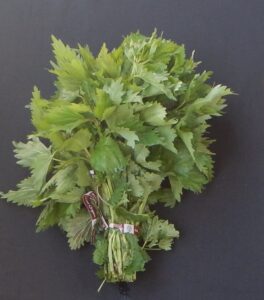
Nettles: This green is also called “Stinging Nettles” due to the “stingers” they have on their stems that can cause skin irritation if handled before they are cooked. For this reason, we have packed the nettles in a clear plastic bag. Before you open the bag, we encourage you to read our previous blog post for important information about how to handle and prepare nettles. Once nettles are cooked, the sting goes away and you can handle them with bare hands. They are packed with nutrients and are very flavorful.
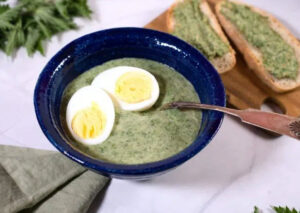
Raw Chocolate Cupcakes with Nettle Frosting
Egyptian Walking Onions: This is an overwintered multiplier onion. It’s called a “walking” onion because it forms a “set” on top that makes the green top so heavy it falls over, thereby propagating itself and “walking,”. These onions have rounded leaves/ tops while green garlic has flat tops! This is a flavorful onion, so be sure to use all of it from the base to the green tops.
Overwintered Parsnips: While we harvest most of our parsnips in the fall, we always leave some in the field over the winter and dig them in the spring. One way they are able to survive the winter is by increasing natural sugars which act as antifreeze. The side benefit of this adaptation is they are super sweet and delicious! These parsnips may have small browning spots on them, but don’t worry, those blemishes are only skin deep. Use a peeler or paring knife to peel off the brown spots and enjoy the rest! They may be roasted, boiled and pan fried.
Savory Bread Pudding with Parsnips
Hearty One-Bowl Parsnip Muffins
Wild Ramps: There is one bunch of ramps in your box this week. The season was early so this will be the only ramps we see in CSA boxes this season. They resemble a green onion with white bulbs on the bottom and round lily-like leaves. The leaves are delicate, so it’s best to store them in the refrigerator in a plastic bag or wrapped in a moist cloth. Use the leaves within several days. The white bulbs will store easily for 1-2 weeks.
Egg Noodles in Ramp Horseradish Cream
Asparagus with Creamy Ramp Goat Cheese Sauce
Sorrel: This is the bunched green that is lighter in color and has arrow-shaped leaves. Sorrel is a tangy green that adds bright flavor to raw salads, smoothies, etc. It can also be cooked and is unique in that it literally melts into liquid when it is heated, such as in soups and sauces. It also changes color from bright green to olive green, which is totally normal. Use it in soups and sauces.
Green Barley Soup with Sorrel & Spinach
Frosty Sorrel and Banana Smoothie
Overwintered Spinach: This is special spinach, unlike any other you’ll eat throughout the year. We planted it last fall and we are harvesting new growth this spring. The leaves are thick, tender and sweet! You may notice a little discoloration on the edges of some leaves. This is likely a little frost damage, but the frost is what makes it taste good, so we hope you’ll be forgiving. For optimum shelf life, we recommend you line the bag with a paper towel or clean cloth to absorb any extra moisture and keep it in the refrigerator.
Spring Spinach Chop Salad with Creamy Buttermilk Ramp Dressing
Overwintered Sunchokes: Sunchokes are a tuber that grows on a plant in the sunflower family. They are another unique vegetable that can be stored in the ground through the winter for harvest in the spring. You can prepare sunchokes in any way you would prepare a potato, plus they may be enjoyed raw in salsa and raw salads. Sunchokes do contain inulin, a non-digestible fiber that may cause gas and/or bloating in some individuals. For this reason, we recommend eating sunchokes in small portions.
Smashed Sunchokes with Thyme Butter
Watercress: Watercress is a spicy, peppery green that can be quite pungent when eaten on its own. The flavor is more enjoyable and balanced when paired with other ingredients that are higher in fat or acidity such as dairy products, nut oils, vinegar, lemon juice and pickles. We carefully harvest this watercress which grows in spring-fed water on a property we farm and manage in our valley. We have washed it using the same process we use to wash our salad greens; however, we recommend you give it a final washing in a sink of clean, cold water to remove any sand, etc. which may remain. Once washed, pat dry or use a salad spinner to remove excess water. This watercress did see some minor frost this week, so it may not hold in your refrigerator as long as usual, we recommend eating it within a couple of days.
Asparagus and Watercress Pizza
CHOICE—Decorative Willow: This week we are sending decorative willow bunches as a choice item. We plant willow in hedgerows as beneficial habitat for birds, bees and other creatures, but they also function as a buffer in some locations. Please take one if you would like to have a little piece of Harmony Valley Farm to decorate your home or office. They are not edible but are an important part of our farm’s biodiversity. They’ll last for months and possibly years if kept dry!
CHOICE—Calendars: Please take a calendar this week! We have sent a few extras, and they will be available in future weeks, so feel free to take an extra if you’d like. Inside you’ll find CSA Site Information, vegetable storage information and more!
Vegetable Feature: Nettles

We look forward to nettles every spring as they are one of our “Wisconsin Super Foods!” They are one of the most nutrient-dense spring greens we have available early in the season. Please be forewarned that these nettles are the “stinging nettles” many might consider a weed. They have little fibers on the stems that contain formic acid which will give you a “stinging” sensation if you brush up against them before they’ve been washed or try to harvest them with bare hands. Washing the nettles will remove most of the stinging fibers and there is no sting remaining after they are cooked. We vigorously washed the nettles in your box and put them in a bag to make handling easier for you. Even though we’ve washed them, I would still recommend you handle them carefully and avoid touching them with your bare hands prior to cooking them. With a flavor similar to spinach, they contain a whole host of nutrients including protein, calcium, magnesium, potassium, boron, carotenoids and iron. They are also reported to relieve eczema and seasonal allergies.
Nettle leaves are perishable, so it is best to cook them shortly after you receive them. Even if you don’t want to eat them right away, it is better to store them in their cooked form for a few days until you are ready to use them. The cooking water actually makes a beautiful tea, so don’t discard it. You can drink the tea either hot or cold and mixed with honey and lemon. It’s delicious and makes the cooking process dual purpose. Nettles actually originated in Europe and Asia, so are a familiar vegetable in many of the cuisines from these regions. They are often used to make soup, but you can also use the nettles in a pesto, to top off a pizza, or incorporated into a risotto or pasta dishes. Nettle purée may be used in pasta or gnocchi dough to make a stunning appearance, or the nettles can be used in a ravioli filling. Nettles go well with cheese, cream, mushrooms and other spring greens.
Please refer to our previous blog post for handling instructions and tips to follow before you open your bag and use the nettles. These guidelines will help you find success with your nettles! If you do get a little sting while handling nettles, it generally subsides within an hour. If the sting does persist you may find it soothing to apply a little aloe vera or make a paste with baking soda and water and put it on the affected area.
Please note, while most people eat nettles cooked, you can eat them raw as well. If you choose to eat them raw, we would strongly advise you to do so in a form that requires them to be chopped finely either with a knife or in a food processor, such as nettle pesto. Some individuals may be sensitive to eating raw nettles, so if you have any hesitancy, we’d recommend just blanching or thoroughly cooking the nettles before you eat them.
Farm Update
Welcome to the 2026 CSA Season! Have fun cooking and eating your way through the first box. We’re glad you made the decision to eat through the midwestern growing season with us this year! Our season is off to a great start. The ramps had an early start this season so sadly the ones in this week’s box are all we are going to see this season.
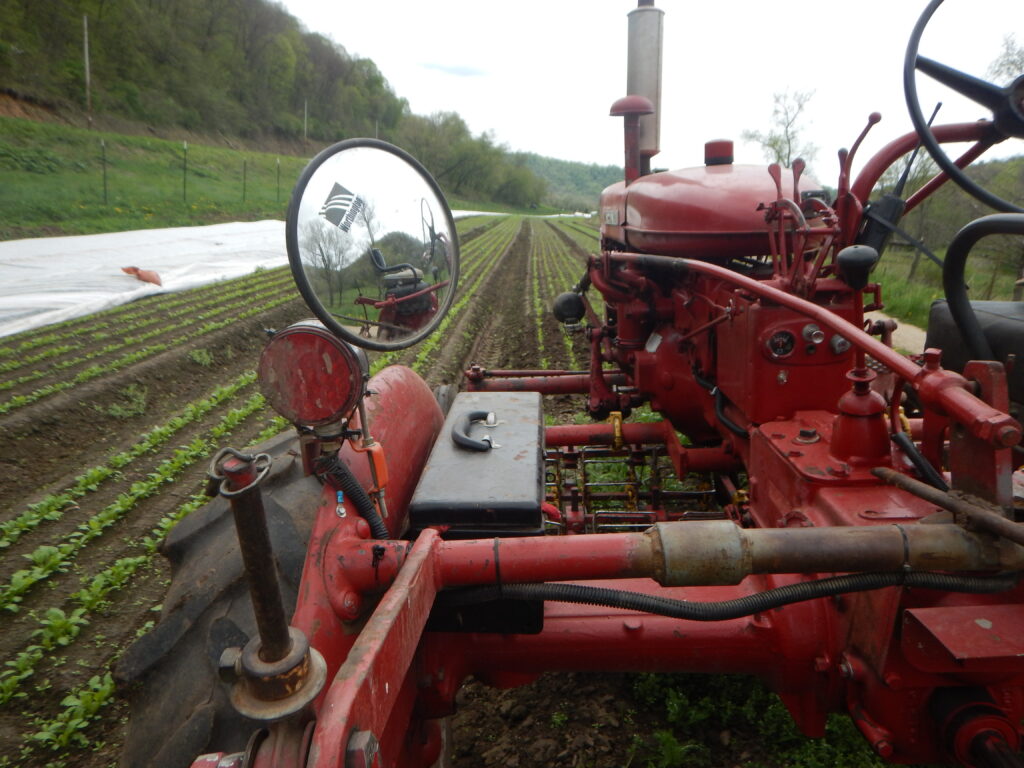
We had abundant April showers this spring but now have had a dryer spell. That means that our irrigation team has been busy setting up the field and planning out the correct ratio of water/fertilizer mix. Fun fact, not all vegetables receive the same ratio! Luis and his cultivating team have been busy already with keeping weeds at bay and doing an amazing job too!
Speaking of teams, we have a full crew this season with 5 new crew members. They are fitting in well and looking to learn all kinds of new skills on the farm. The other returning team is glad the rains stopped for now and have been going full throttle on planting and transplanting into the fields. The transplanting teams are working closely with Ana and Silve (the greenhouse leaders) to make sure the plants are ready for the fields.
We anticipate seeing our first red radishes and arugula next week. We will see if they grow enough to make our CSA boxes with these cooler temperatures. Then predicted 70-degree highs, then back down to upper 30’s at night. I am not sure why this surprises us; it is just another typical upper Midwest spring!