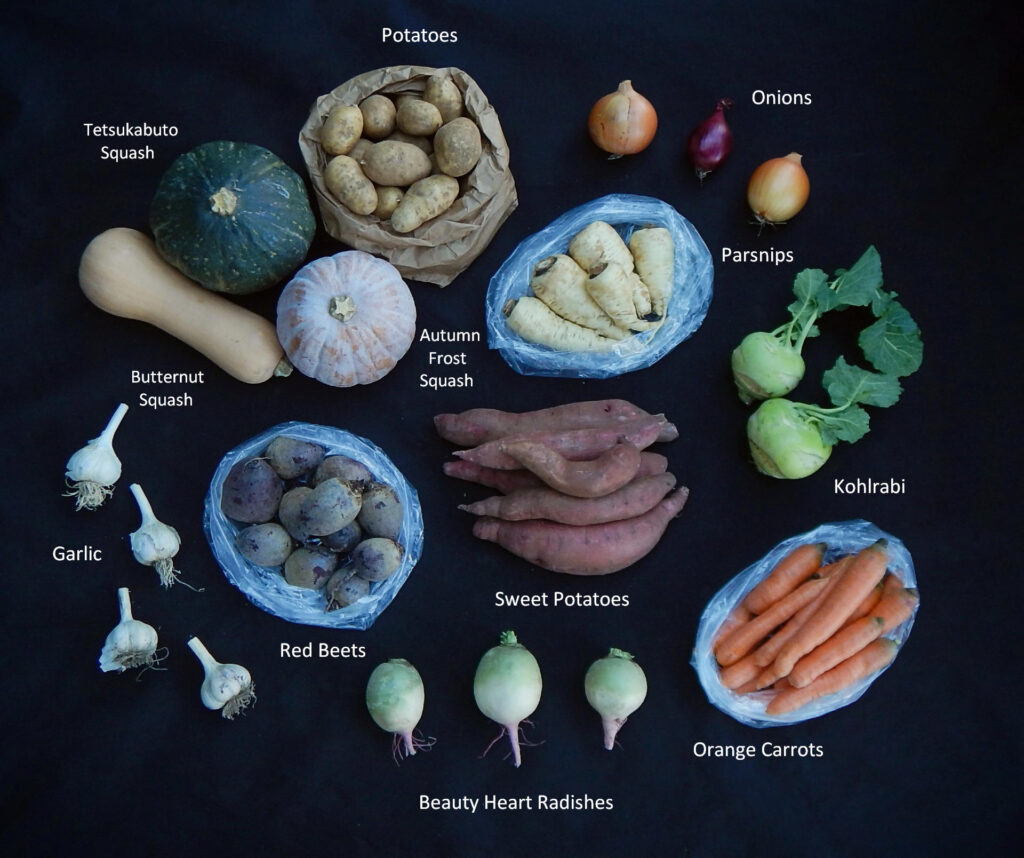

What’s In The Box with Recipe Suggestions
Red Beets: Use beets in tasty winter salads, soups, or simply roasted. Store them in the refrigerator in a plastic bag to keep them from dehydrating.
Carrot & Beet Morning Glory Muffins with Honey & Hazelnuts
Orange Carrots: We have had a very bountiful fall carrot harvest! Use this staple vegetable to add background flavor to fall soups, stews, broth, salads, etc. Of course you may also choose to just munch on them raw!
Shredded Carrot Salad with Honey Mustard Dressing
5-Minute Ginger Soy Carrot Salad
Italian and Porcelain Garlic: Add minced garlic to scrambled eggs for breakfast, make garlic mayonnaise to spread on your sandwich for lunch and enjoy a tasty garlic sauce on pasta for dinner.
Kohlrabi: This kohlrabi is a storage variety intended to keep in cold storage for months! You’ll find the flesh to be crispy, juicy, sweet and delicious! Use it to make tasty winter slaws along with apples, other root vegetables, etc. Store it in the refrigerator and peel it before using it.
Red & Yellow Onions: Store onions in a cool, dry location. If you notice them starting to sprout, it’s time to use them! Just remove the sprout from the center of the onion and use the remainder.
Roasted Beet, Caramelized Onion & Goat Cheese Tart
Red Onion & Blood Orange Salad
Parsnips: Parsnips grow in a variety of sizes, so you may receive small parsnips or larger ones! Small parsnips may be cooked whole or cut in half. If you have a variety of sizes in your box this week, try to cut the parsnips into similar sized pieces for more even cooking.
20 Minute Honey Roasted Parsnips
Pureed Parsnip & Cardamom Soup with Caramelized Shallots
Potatoes (Purple Majesty, Norkotah, Huckleberry or German Butterball): We do not treat our potatoes with anything to keep them from sprouting, which is what they’ll want to do naturally after being in storage! It’s best to store potatoes in a cool, dry location and keep them out of direct sunlight. Exposure to light will cause them to turn green and accelerate the sprouting process. We recommend covering them with a dark cloth. If you notice a sprout starting to form, just break it off and prioritize using those potatoes first. If your potatoes start to get a little wrinkly, they are still edible and make a great potato soup!
The Ultimate Creamy Potato Soup
Easy Roasted Chicken Thighs with Potatoes
Beauty Heart Radishes: This radish not only stores for months, but it also brings a big splash of color to your winter meals! Use beauty heart radishes in a stir-fry, roast them, or eat them raw. It’s up to you if you want to peel them. Just under the outer skin is often where the most pungent flavors lie. Some who prefer a milder radish flavor prefer to peel them.
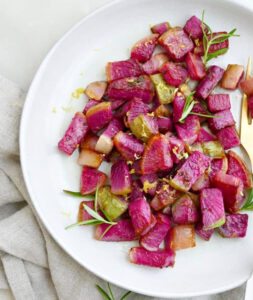
Beauty Heart Radish Salad with Lemon Vinaigrette
Beauty Heart Radish Toast with Cream Cheese, Lemon and Honey
Sweet Potatoes: The ideal storage temperature for sweet potatoes is 55-65 degrees. If you don’t have an appropriate location to hold them at this temperature, it’s best to store them at room temperature. Do not put them in the refrigerator or they’ll suffer cold injury which will cause them to deteriorate.
Autumn Frost Squash: This variety is similar to butternut squash and may be used interchangeably with butternut squash in any recipe. The ideal storage temperature for winter squash is 45-55 degrees and dry. Storing them at temperatures less than 45 degrees will shorten their shelf life. You can also store them at room temperature in your kitchen. If you notice a spot or defect starting to develop, it’s time to cook it!
Tetsukabuto Squash: The name of this dark green squash means “Steel Helmet” in Japanese, appropriately named as the rind of this squash is very firm and serves as a protective layer for this squash. One of the reasons we saved this variety until the very end is because it has a very long storage potential! The other reason is because it’s delicious! It’s a combination of butternut and kabocha varieties.
Kabocha Squash Pie with Black Pepper & Ginger
Kabocha Squash Curry with Chickpeas
Butternut Squash: This week you will receive one of our 3 varieties: Butterscotch, Ceres or Granite, all very good varieties. Butternut squash is one of the most common and popular varieties of winter squash, so you shouldn’t have a problem finding recipe suggestions for how to prepare it!
Slow Cooker Butternut Squash Shakshuka
Cabbage or Lacinato Kale Tops (not pictured): This storage cabbage may be eaten raw or cooked. Use it to make soups, sauté it, or use it to make Homemade Egg Rolls The Lacinato Kale tops have been through some very cold nights and were totally frozen. The result—excellent, sweet flavor!
Vegetable Feature: Beauty Heart Radishes

These radishes can be deceiving. They are creamy white to green on the outside with brilliant hot pink flesh on the inside! Beauty heart radishes are one of several winter storage radishes we rely on this time of the year. Storage radishes differ from common fresh red radishes in several ways. First, they are more durable and denser with a thicker outer skin, all qualities that improve their storage potential. Storage radishes are intended to be stored through the winter months, so it makes sense that they would be grown for harvest in the fall. Their flavor is more balanced and desirable after they’ve had some cold fall nights, yet another reason to grow them in this season. While the green tops of storage radishes are edible, you seldom see these radishes with their tops as they are typically removed at the time of harvest. In contrast, those little red radishes are usually sold with the green tops still attached, which is an indicator of freshness.
Radishes are an important part of many cultures in Asia including Chinese, Korean and Japanese. It’s amazing to look at all the different shapes, colors and sizes of radishes grown in these countries. Richard started growing beauty heart radishes back in his early farming days in the early 70’s. He had never had this radish, but he was scanning any seed catalog he could find looking for the unique vegetables no one else was growing. He has an interesting story to share about how this radish came to be called ‘Beauty Heart.’ “When we introduced this radish to the Midwest, it was called ‘green skin/red flesh,’ accurate, but not a particularly poetic name! One of our farmer’s market customers from Korea recognized the radish and shared the Korean name with us, which translates to ‘beauty heart.’ We thought this name was much more fitting to the radish, so we called them beauty heart radishes from then on. At that time, beauty heart radishes really weren’t being grown commercially, but as their popularity started to grow and more producers started growing them commercially, we started to see ‘watermelon radishes’ coming out of California. ‘Red Meat’ is another name used for this radish, amongst others. But for us and much of the Midwest, this radish will hopefully always remain ‘Beauty Heart!’
Beauty heart radishes are milder than many winter storage radishes and you’ll even notice a bit of sweetness in them as well. They may be eaten both raw and cooked. Their flavor is more pungent when raw and a lot of the radish bites are in the outer skin. If you want to tame them down a bit, peel away a thin layer of the skin and/or salt them. Beauty heart radishes are beautiful in salads, sliced thinly and added to sandwiches, pickled, or included on a vegetable platter. We like to eat slices of beauty heart radishes with slices of cheese instead of a cracker. But raw is not the only way to eat them. You can add them to winter stir-fries, roast and sauté them, or add them to soups and stews. When cooked, their flavor mellows even further. So, if you are not a radish lover, do yourself a favor and try preparing them with a cooked method.
Store beauty heart radishes in the refrigerator loosely wrapped in a plastic bag to keep them from dehydrating. They will store for months, although they may not look so pretty after awhile. Trust us, they’ll still be good on the inside. Just give them a scrub and peel away the outer skin before using.