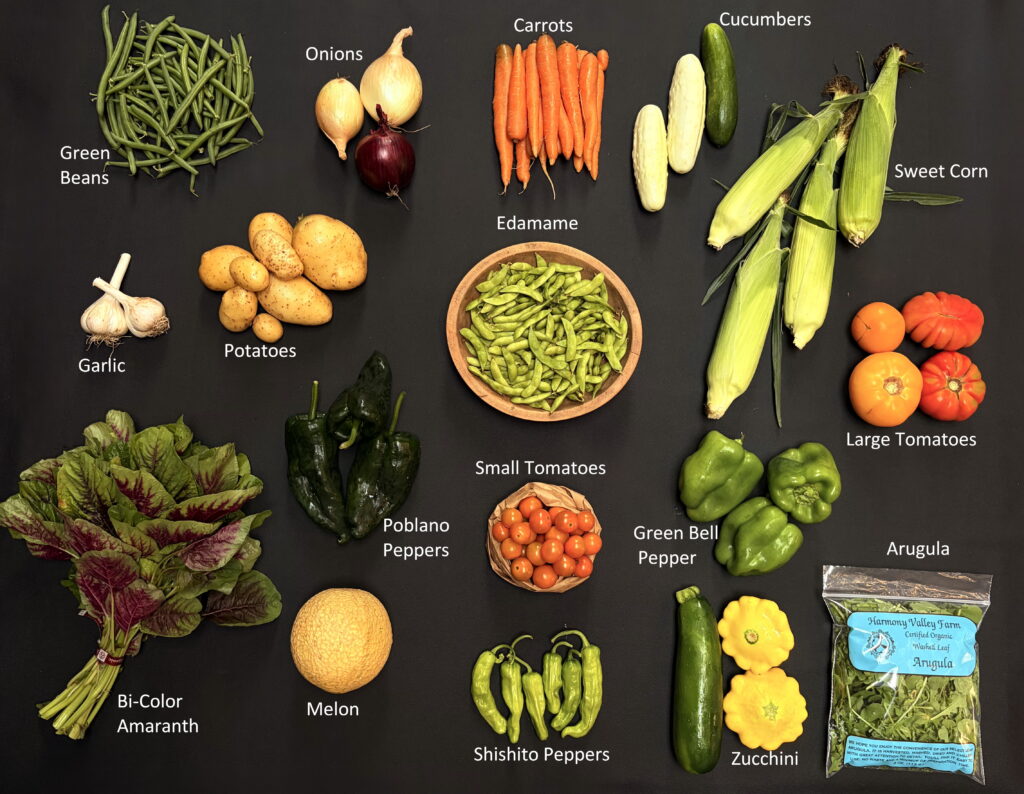
What’s In The Box with Recipe Suggestions
Bi-Colored Amaranth Greens: One of our favorite things about Amaranth is how colorful it is! The bright green and deep red leaves make any meal look beautiful. If you have never cooked this amazing vegetable before, don’t worry – it can be used just like spinach. Try it in a stir-fry, soup, or simply sautéed them with garlic and olive oil. This is the go-to “green” for midsummer when all others have bolted.”
Arugula: This is the frilly green baby “green” packaged in a clear, resealable bag. Arugula adds a fresh, peppery flavor to any meal. We love tossing it into salads or using it on homemade pizza after it comes out of the oven.
15 Minute Thin Crust Pizza with Arugula and Hot Honey
Arugula and Nectarine Salad with Yogurt Dressing
Green Beans: Green beans are an easy crop to preserve so you can enjoy them in the middle of the winter when you’re missing your CSA boxes! To freeze green beans, simply remove the stem from the end of the bean and snap the bean into bite-sized pieces. Steam or boil the beans in salted water, just until they turn bright green and are a little more tender. Remove them from the heat and shock them in cold water to stop the cooking. Pat the beans dry and put them in a freezer bag to store in your freezer.
Linguine with Pesto, Green Beans & Potatoes
Orange Carrots: This week’s sweet and tender carrots make the perfect snack, either on their own or dipped in cream cheese, hummus, dip, etc. Just give them a light scrubbing and put them in a container in the refrigerator, so they’ll be easy to reach for when that snacking urge strikes!
Green and/or Silver Slicer Cucumbers: Cucumbers are Mother Nature’s gift of hydration on hot summer days! Slice them up and put them in your cooler if you’re heading out to the pool or on a day hike. Enjoy them with a pinch of salt or take along your favorite dip.
Shredded Chicken Wraps with Avocado, Cucumber and Cilantro
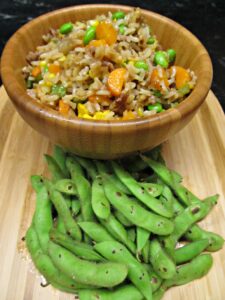
Edamame: If you’ve never tried fresh edamame, this is the perfect week! Around the farm, it’s one of our favorite summer snacks. We simply boil the pods, sprinkle them with Tajín and a squeeze of fresh lime, and enjoy them while they’re still warm. The pod isn’t meant to be eaten; just pop it into your mouth, use your teeth to squeeze out the beans, and discard the pod. We love adding Tajín and lime because it gives this snack a fun Mexican twist. We hope you’ll give it a try! You can read more about Edamame in our Vegetable Gallery portion of the website.
Beef Stir-Fry with Broccoli & Edamame
Cold Ramen Noodle Salad with Edamame & Broccoli
Porcelain Garlic: Porcelain garlic is known for having larger cloves, with fewer per bulb. While this isn’t truly “fresh” anymore, it’s also not fully dried. Store it on the countertop at room temperature so it can continue to dry until you are ready to use it.
Tomato Soup With a Whole Head of Garlic!
Sun Jewel or Sugar Cube or Delicious Melons: This week, your box will contain one of two different varieties: the “Sugar Cube” or the yellow Korean “Sun Jewel” melon. All the melons are ripe when picked, but some may ripen further at room temperature if they have a bit of a greenish hue on the rind. As with tomatoes, when a melon is ripe it is best to either eat it or refrigerate it temporarily until you can eat it.
Korean Melon with Apple & Ginger
Red and Yellow Onions: Yes, red and yellow onions may be used interchangeably, but they do each have their moments where they shine. Red onions are an excellent choice to include in fresh tomato & cucumber salads during the late summer season. Yellow onions are a great selection if you are creating the flavor base for sauteed vegetables or soup.
Red Onion & Bell Pepper Relish
Green Bell Pepper: These peppers are not hot. They are a “sweet” pepper, although they are not terribly sweet when they are green. These bell peppers bring color and crunch to your plate. They’re delicious fresh, grilled, or stuffed with your favorite filling.
Bell Pepper Stir-Fry with Tofu
Poblano Peppers: This is a pepper with a mild to moderate level of heat. You can identify this pepper by its dark green color that is almost black, along with its shape of blocky shoulders that taper to a point.
Sheet Pan Cheesy Poblano Corn Enchiladas
Shishito Peppers: (A message from Richard) A new crop for us this season, we hope you enjoy these delicious Shishito peppers as much as we do! Shishitos are a mild Japanese heirloom pepper, typically 2–4 inches long with thin, crinkled walls. They begin bright green and gradually ripen to red later in the season. While most peppers are pleasantly mild, every now and then you’ll find one with a surprising little kick! A popular street food and bar snack throughout Japan and East Asia, Shishitos are best when blistered, charred, or roasted, which brings out their rich, slightly smoky flavor with subtle citrusy, green chili notes. The easiest way to prepare them is in a very hot, dry cast-iron skillet or grill pan. Cook for just a few minutes, turning occasionally, until the skins are blistered, lightly blackened, and slightly translucent. You can also sauté them in a little olive oil or sesame oil until tender. Finish with a sprinkle of flaky salt, or toss with soy sauce, sesame seeds, and a squeeze of fresh lemon. Shishitos are traditionally eaten whole—simply hold them by the stem, take a bite, and enjoy the pepper (seeds and all), leaving only the stem behind. Eat whole, do not try to remove seeds, All are tender and eatable! They are delicious served as an appetizer, snack, or alongside grilled steak, chili-lime chicken, fish, or your favorite summer meal. Let us know what you think!
Carola Potatoes or Peter Wilcox Potatoes: Carola is one of our longstanding potato varieties that is gold on the outside and inside! It’s classified as a waxy potato and is good for baking, frying, boiling and roasting. Peter Wilcox Potatoes have dark purple skin and gold flesh; this variety is a great example of how nutrients in food benefit our health but also make food taste better!
Sweet Corn: What do you do with some ears of beautiful corn? Cut the kernels off the cob and use them to make corn chowder, corn salsa, sauté them into scrambled eggs, and the list goes on! Use the cobs to make a tasty corn broth or vegetable stock that will serve as a good base for summer soups or as the broth to make risotto or other cooked grains.
Tomatoes Small: Pop these in your mouth for a sweet treat, roast them with olive oil, garlic and fresh herbs, or add them to a salad! All three of these varieties are unique in their flavor, texture and appearance, but the one trait they all hold is sweetness!
Baked Feta with Cherry Tomatoes
Variety of Tomatoes: There’s nothing like a vine-ripened summer tomato. Slice it for sandwiches, burgers, or enjoy it with a little salt, pepper, and fresh basil. When you open your bag of tomatoes, take them out and assess them. Take note of their level of ripeness assessing whether they are fully or nearly ripe and should be eaten within a day or two. If they are still on the green side, it’s best to ripen them at room temperature
Mediterranean Garlic Fried Tomatoes
Green and/or Italian and/or Yellow Scallopini Squash: Zucchini is one of the easiest vegetables to enjoy. Grill it, roast it, sauté it, or bake it into bread. It’s fresh, simple, and perfect for summer meals.
Lemon Poppyseed Zucchini Muffins
Vegetable Feature: Edamame

Edamame is a fresh soybean that has grown in popularity in the United States over the past few years but has been a part of Japanese and Chinese cuisine for much longer. True edamame intended for fresh eating is quite different than oil-seed soybeans and tofu beans, which are most often grown to make tofu and other processed soy products. The edamame varieties we grow were developed specifically because they produce a sweet bean that doesn’t have a “beany” aftertaste and is the preferred variety in Japan and China for fresh eating. Seed varieties for tofu beans are typically much less expensive than varieties for fresh eating, thus in this country the edamame found in the frozen section, either in the pod or shelled, is likely a tofu bean with that “beany” aftertaste. We actually save our own seed, which still comes at a cost, but allows us to grow our preferred, clean tasting varieties.
Edamame resembles a small lima bean encased in a pod. The beans are sweet and tender and best eaten lightly cooked. Unlike sugar snap peas, edamame pods are not edible and should be discarded. Edamame is hard to shell when it’s raw. It is easiest to cook edamame in its pod first and then remove the beans from the pod. To cook edamame, rinse the pods thoroughly with cold water. Bring a pot of heavily salted water (salty like the sea) to a boil. Add the edamame and boil for about 3-4 minutes. You should see the pods change to a bright green color. Remove the edamame from the boiling water and immediately put them in ice water or run cold water over them to quickly cool them. After the beans are cooked you can easily squeeze the pod to pop the beans out, either into a bowl or directly into your mouth! Once you’ve removed them from the pods, they are ready to incorporate into a recipe or eat as a snack.
You can also roast edamame in their pods. Basically, you toss the edamame pods with oil and seasonings of your choice. Serve the beans whole with their pods still on. While you won’t eat the pod, you can use your teeth to pull the edamame out of the pod and in the process, you’ll pick up the seasoning on the outside of the pod!
Edamame is often eaten as a simple snack, but you can also incorporate it into vegetable or grain salads, stir-fry, fried rice, ramen bowls, steamed dumplings or pot stickers to name just a few suggestions. They pair well with any combination of traditional Asian ingredients such as sesame oil, soy sauce and ginger. They are also a nice, bright addition to brothy soups such as a miso soup. If you follow the suggested method for boiling edamame before shelling them, the bean will already be fully cooked, so if you are adding edamame to a hot dish or recipe, do so at the end of the cooking.
You can store fresh or cooked edamame for up to a week in the refrigerator, but it is best to eat them soon for the sweetest flavor and best texture. If you want to preserve edamame for later use, simply follow the cooking procedure above, then freeze the beans either in their pods or remove them and freeze just the bean. It’s fun to pull something green out of the freezer in the winter to enjoy as a snack or incorporate into a winter stir-fry or pan of fried rice.
Farm Update
This week brings more inspections! This week was a surprise inspection from our State of Wisconsin Regulatory Specialist/Migrant Labor Inspector. His name is Pedro and he is also the inspector that inspects our housing units for our H2A Visa crew each February. He popped in on Tuesday to inspect the houses.
Wednesday, Lucy with Real Organic was at the farm doing her inspection. She talked with Richard and walked through the buildings with him. Then she took a farm tour with Rafael to look at our fields and talk about some of our practices. After the field, Lucy talked with different crew members asking about working here. She left with a smile and gave us a passing score for the day!
This week also marks the halfway point in our CSA delivery season with box number 15! We still have Autumn Share boxes (the last 4 deliveries in November and December) available, as well as our Flex Plan boxes. With the Flex Plan you can choose the total number of boxes you would like for the rest of the season and schedule them on the weeks that you would like – no set schedule. You can even change the dates once you have them set up! Feel free to email us (csa@harmonyvalleyfarm.com) if you have any questions.