What’s In The Box with Recipe Suggestions
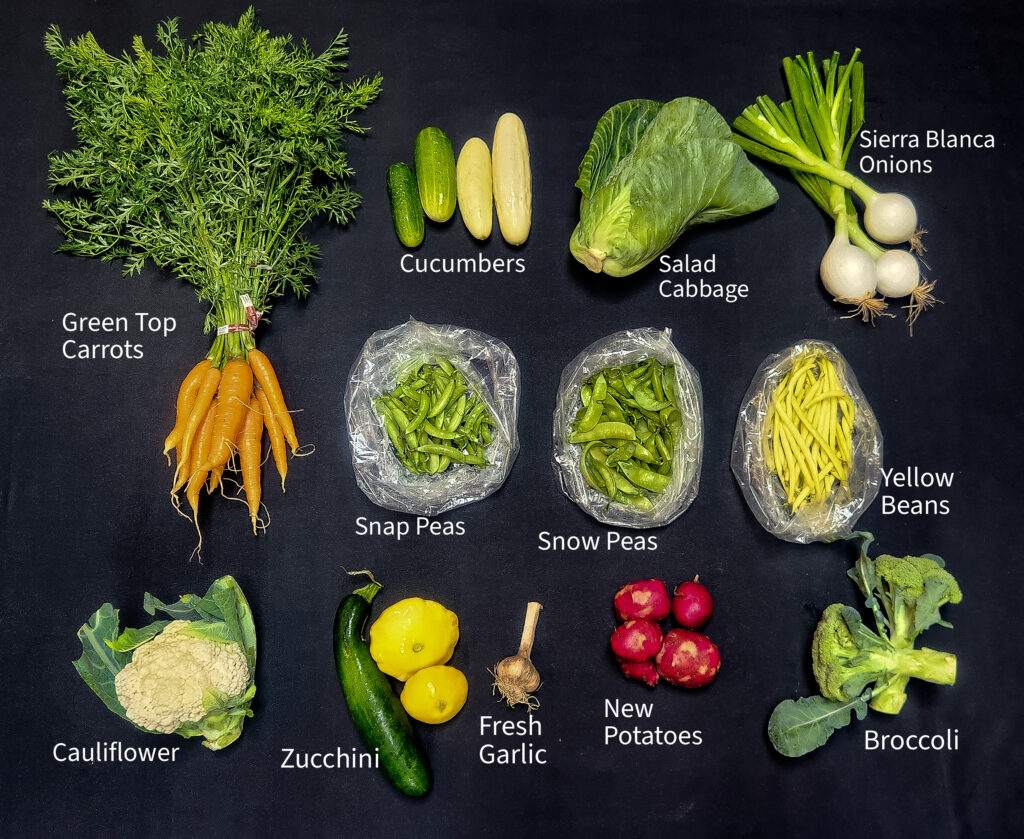
Yellow Beans: Cook beans with onions, garlic, new potatoes and a smoked ham hock for a simple Southern-style recipe that may be served as a side dish or the main event!
Saucy Stovetop Thai Green Beans
Green Bean Casserole with Walnut Bacon Crumble
Broccoli: Store broccoli in the refrigerator loosely wrapped in a plastic bag until ready to use it. Use the florets and stem to make a simple soup, stir-fry or salad.
How To Eat Broccoli Stalks: 7 Ways To Use Them To Make Your Meals More Nutritious
Sweetheart Salad Cabbage: This variety of cabbage is characterized by its pointy shape. The leaves of this cabbage are more tender and are a great option for a raw salad. Store any unused portion loosely wrapped in plastic in the refrigerator.
Summer Vietnamese Rice Noodle Salad
Life-Changing Crispy Baked Fish Tacos with Cilantro Lime Slaw
Green Top Orange Carrots: Enjoy these tender, sweet carrots raw or lightly cooked. Use the feathery green tops to make pesto or chimichurri (both recipes shared last week) or add them to soup or bone broth.
Carrot Top Salad with Chickpeas
Cauliflower: This cauliflower is delicious when simply steamed and served with a pat of butter or toss it with oil and roast it until it’s tender and golden. If you want to go a little over the top, you could finish it with a squeeze of lemon or add some spices to the mix.
Creamy Roasted Cauliflower Soup
Green and/or Silver Slicer Cucumbers: Cucumbers are one of nature’s fast foods. Just cut one into slices and enjoy it as a snack with salt, hummus, or your favorite dip.
Roasted Beet and Goat Cheese Salad with Balsamic Vinaigrette
Fresh Garlic: Fresh garlic is delicate, so handle it carefully so you don’t bruise the cloves. You’ll find the skin surrounding the cloves is very fresh and may be a little difficult to peel off—be patient, it’s worth the effort as the garlic cloves are juicy and full flavored!
Fresh White Onions: This week’s onion variety is “Sierra Blanca,” a fresh, white onion intended to be eaten fresh. If left to dry at room temperature, it will form a very thin, dry skin, but it does not have a thick skin that would help it to store for months. This is an excellent onion to use raw on sandwiches and salads…. especially when sliced thinly.
Roasted Sugar Snap Peas & Onions
Sugar Snap Peas: We like to grow sugar snap peas because they have an edible pod! Just peel back the little stem on the top of the pod by pulling back on the end where the pea was connected to the plant. Enjoy them as a raw snack or in a fresh vegetable salad or lightly cook them until tender-crisp.
Herby Lemon Spaghetti with Snap Peas
Shaved Snap Pea Salad with Goat Cheese & Dates
Snow Peas: Snow peas are characterized by a wide, flat pod that is edible. Just remove the little stem and the string that is attached to it that runs along the top of the pea pod. Enjoy them in a stir-fry, lightly steamed, added to salads, or eat them right out of the bag!
Chicken, Cabbage & Snow Pea Grain Bowl with Coconut-Peanut Sauce
Red Norland New Potatoes: These red-skinned, white flesh potatoes were dug this weekend and have thin, delicate skin. Gently wash them before using, but don’t scrub too hard or the skin will easily come off. Eat them within about a week and store them in the refrigerator.
Potato, Cauliflower & Green Bean Curry
Green and/or Italian and/or Yellow Scallopini Squash: You can’t go wrong when using zucchini to make baked goods! Zucchini has a high moisture content which helps to make baked goods that are moist!
Vegetable Feature: Zucchini

So why is zucchini good for us? First, while the flesh of zucchini seems kind of dry, it actually has a high moisture content which is more evident when you grate, salt or cook it. As you do any of these things to zucchini, you’ll see the flesh start to release moisture. During the heat of the summer, hydration is exactly what our bodies need! Proper hydration is important for many health reasons, including healthy skin and properly functioning kidneys. Zucchini is also rich in vitamins A, B and C along with potassium, magnesium, folate, and a host of other antioxidants. A lot of these valuable nutrients are in the skin. Since zucchini has thin, tender skin it is seldom ever peeled, and the peel is incorporated in most dishes. We know these nutrients contribute in many ways in our bodies including maintaining electrolyte balance, calming the nervous system, and dealing with free radicals that may otherwise negatively affect our tissues and cells. Without going into every potential health benefit, the bottom line is that zucchini really can impact our overall health when incorporated into our diets throughout the summer! No one food will save or protect us from disease alone, but rather it is the sum total of all the food we eat that contributes to our overall picture of health. This is why it’s important to eat a variety of vegetables every day as well as over the course of the year!
We typically harvest up to three times a week from mid-June through August and sometimes into September. Sometimes we have a little gap between plantings one and two but expect to see Zucchini in our share boxes for quite some time! This year we are growing the traditional green zucchini, but we have a few other varieties as well. You may also receive Sunburst Scallopini Squash. While this is not a zucchini, it’s in the same family of vegetables that we can label as “Summer Squash.” These may be used interchangeably in recipes calling for zucchini and/or summer squash.
Zucchini is a very mild-flavored vegetable which lends to its versatility. It pairs well with so many different flavors and is easily adaptable to combinations with other vegetables throughout the entire summer. Zucchini is most often cooked, but it can be eaten raw as well.
The other nice thing about zucchini is there are ways to preserve it so you can enjoy it throughout the year. One of the easiest things to do is grate or shred raw zucchini, squeeze out the excess moisture and then put the zucchini in a freezer bag and pop it in the freezer. In this way, you can use zucchini at a later time in soups and stews, a casserole or baked goods. When freezing zucchini, try to portion it into a quantity that is appropriate for making some of our favorite recipes, or just 1 cup portions so you don’t have to measure it again after you thaw it. Of course, you can also use zucchini to make pickles, relish, and other preserves.
Zucchini can be sautéed, roasted, grilled and stir-fried. It may be used to make snack foods, casseroles, and gratins, incorporated into lasagna and meatballs, dips, enchiladas, tacos, egg dishes, smoothies, soups & stews, desserts, baked goods and more. Depending on how you will be using the zucchini, you may choose to remove the fleshy portion in the center where the seeds are. If you do remove this part, consider saving it to add to vegetable or meat broth or stocks.
Zucchini is a warm weather vegetable and is best stored at temperatures between 45-55°F. We have a dedicated cooler for that temperature range but realize you may not have the perfect storage temperature situation in your home. So, our recommendation is to keep your zucchini at room temperature and use them within a few days of receiving them or store them in the refrigerator for no more than 3 – 4 days at most.
Farm Update
We have spent the last week braving the hot humid temperatures and the rain showers. We try and focus on the positive, but at times have to talk about some ‘bad news’ items. Let’s start with those favorite Red Norland potatoes, the new potatoes in the box this week share box. This is it, for an unknown reason, the plants did not produce the yield we have seen in the past. The good news is that this does not currently seem to be the case with our other potato varieties. We will have to take a couple weeks off of potatoes to let them grow some more, but this week is the start and finish of the Red Norlund variety. Our peas and beans have suffered a little from the heat and rain combinations, but more plantings of beans to come!
Last week we had a lot of rain. On Wednesday night, Thursday morning we had over 4 inches alone and that presents multiple possible problems. We have learned a lot about excess rain in our years of farming. While we didn’t escape without some issues, the bulk majority of our crops are doing okay. We are scheduled to get over a half inch of rain tonight too. Knowing that, we had some crew start work early to get the harvests completed ahead of the weather. Tomorrow we will mitigate the outside work as necessary depending on the weather.