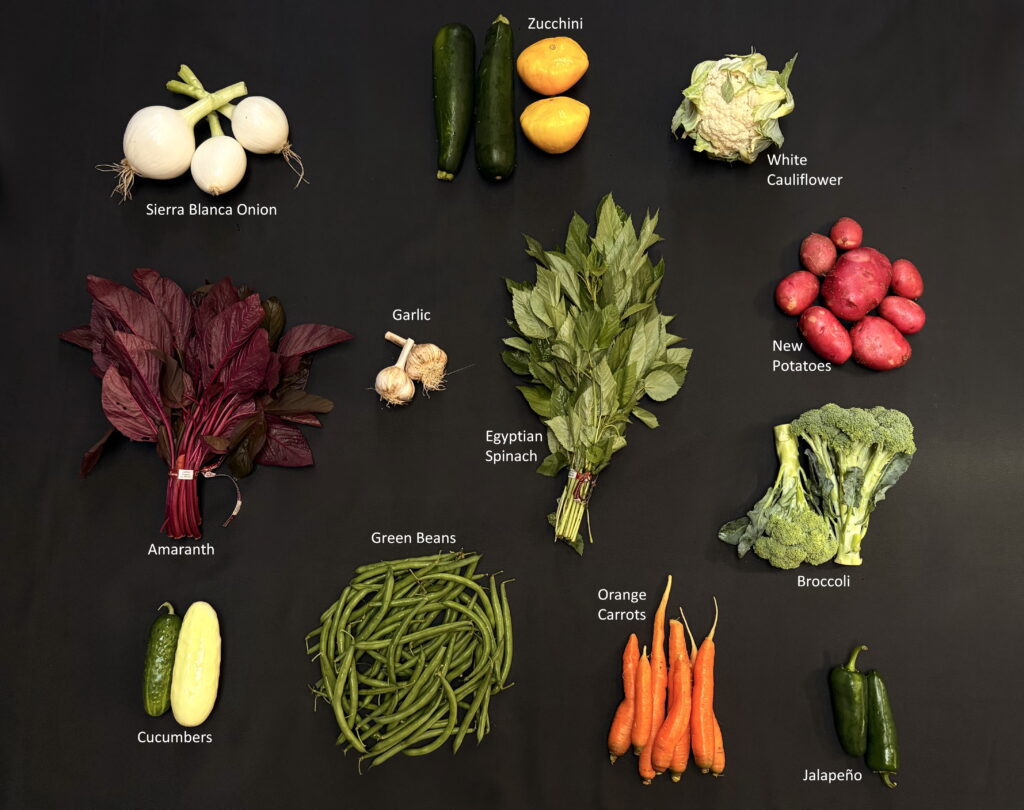
What’s In The Box with Recipe Suggestions
Amaranth: This gorgeous summer green is known for its ability to thrive in the heat of the summer and it’s loaded with nutrients. Compared to spinach, amaranth leaves have three times more vitamin C, calcium and niacin! In this more mature state, amaranth is best used as a cooking green. Remove the leaves and tender portions of the stem. It may be cooked the same way you do spinach, and it pairs well with other summer vegetables including peppers, potatoes, zucchini, sweet corn and onions!
Summer Rice & Cheese Gratin with Amaranth Greens
Red Lentil Soup with Amaranth Greens
Amaranth & Corn Stewed in Coconut Milk
Green Beans: Cook beans with onions, garlic, new potatoes and a smoked ham hock for a simple Southern-style recipe that may be served as a side dish or the main event!
Potato, Green Bean & Bacon Soup
Broccoli: This staple vegetable is loaded with valuable nutrients to support overall health, but it’s also very versatile in use. Turn it into soup, add it to stir-fry, eat it raw in salads, add it to casseroles and hot dishes, or include it in your morning scramble or breakfast casserole.
Simple Coconut Chicken Curry with Broccoli
Orange Carrots: Last weekend we machine harvested our first field of carrots, thus we’re making the transition to bulk carrots instead of green top. Use these tender, sweet carrots to make a tasty carrot salad!
Morning Glory Zucchini Carrot Muffins
Grilled Fish Tacos with Carrot Citrus Slaw
Cauliflower: This cauliflower is delicious when simply steamed and served with a pat of butter or toss it with oil and roast it until it’s tender and golden. If you want to go a little over the top, you could finish it with a squeeze of lemon or add some spices to the mix.
Cauliflower, Broccoli & Pepita Salad
Baked Cauliflower Bites with Buttermilk Dill Ranch Dressing
Green and/or Silver Slicer Cucumbers: Cucumbers are one of nature’s fast foods. Just cut one into slices and enjoy it as a snack with salt, hummus, or your favorite dip.
Fresh Garlic: While the exterior skin is starting to dry down, it is still considered “fresh” as it is not fully cured. You’ll notice the skin surrounding the cloves is still moist and may be a little difficult to remove. The cloves inside are juicy, crisp and have a bright flavor. Store at room temperature.
Jalapeño Pepper: There are two jalapeño peppers in your box! If you are not a fan of hot peppers, feel free to deposit your pepper in the swap box and share it with another member. Of course, we always encourage you to try and utilize each item in your box. You can adjust the amount of heat from the pepper by using only the amount that is to your liking and/or by removing the white ribs and seeds which is where most of the heat is.
Jalapeño Vanilla Breakfast Syrup
Chicken with Jalapeño Cream Sauce
Sierra Blanca Onions:This will likely be the last week of these beautiful white onions. This mild onion is excellent when eaten raw, but is also tasty when sauteed, grilled or roasted.
Brats with Grilled Peppers & Onions
New Red Potatoes: “New” potatoes refer to the fact that these potatoes were harvested off of green vines. As such, the skin on the potatoes is very thin and delicate. The flesh of the potatoes has a high moisture content, so you’ll find they are very crispy when you cut them. Once cooked, take a moment to notice their delicate flavor which is different than that of stored potatoes. Store these potatoes in the refrigerator and use them within a week or two.
Crispy Potato, Egg & Cheese Taco
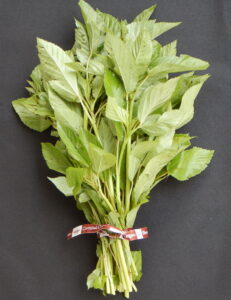
Egyptian Spinach: This is the bunched green in your box with long, slender, thin leaves. It is high in nutrition and will leave you feeling revitalized! Read more about this amazing green in our vegetable feature this week.
Stewed Egyptian Spinach with North African Spices
Green and/or Italian and/or Yellow Scallopini Squash: There is a bounty of this item in your box this week! Scallopini squash is shaped differently but may be used interchangeably in most recipes that call for zucchini…especially if you are dicing or shredding it.
Vegetable Feature: Egyptian Spinach
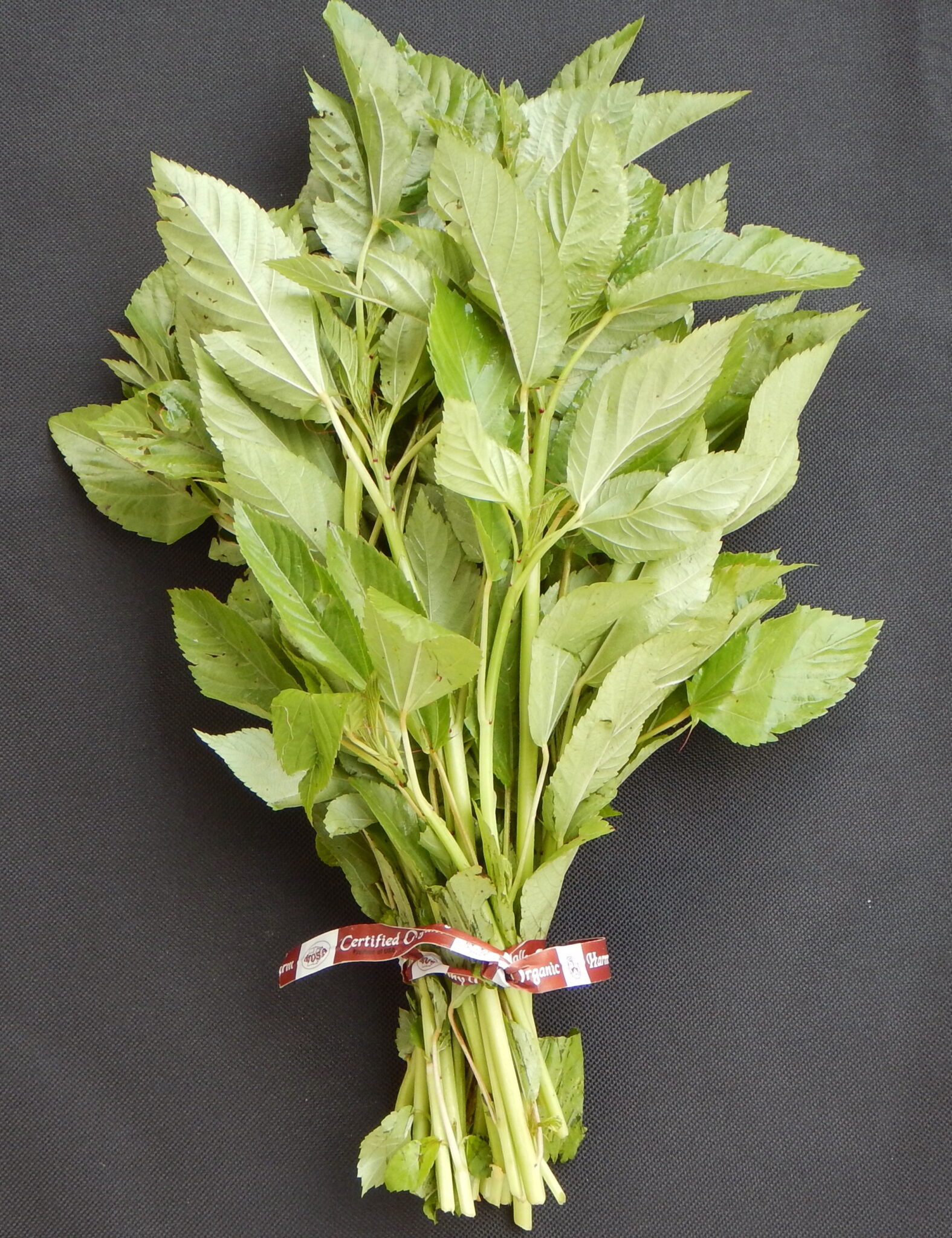
Egyptian spinach, also known as Molokhia, jute mallow, or Jew’s mallow, is a fast-growing leafy green that is best suited to the heat of the summer. Despite its name, Egyptian spinach is actually in a different vegetable family than the spinach you are most familiar. Egyptian spinach is a member of the mallow family, along with okra, cotton, and cacao. It is a highly nutritious ancient green thought to have originated in Egypt before spreading to other parts of the Middle East, North Africa, and eastern Mediterranean areas. It is often referred to as “the food of the kings” as legend tells the story of an Egyptian king who ate this green in soup to recover from illness. Egyptian spinach is now a common vegetable eaten regularly in the aforementioned areas surrounding the Middle East where it may be purchased fresh, frozen, and dried. An Egyptian spinach plant can grow to be about 4 to 6 feet tall and can get extremely bushy. Its long, lance shaped leaves resemble mint and can be harvested multiple times throughout the season.
Egyptian spinach contains a soluble fiber that gives it a viscous texture, similar to that found in okra. You’ll notice this fiber when you cut into the leaves and stems. The viscosity of this green is more apparent when used raw in salads but is hardly noticeable when the green is cooked or used in soups where it functions as a thickener.
Egyptian spinach is most often used in a traditional soup that contains a chicken broth base along with coriander, cumin, and garlic. Egyptian spinach may also be steamed, stewed, or boiled and dressed with a sauce or dressing as simple as a little bit of soy sauce, rice vinegar and sesame oil. When preparing this green, separate the leaves from the stems. The upper portion of the stem is tender and can be cut into bite-sized pieces and cooked. The lower portion of the stem is more tough and fibrous and should be discarded. While this green can be eaten raw, we think it is best when cooked in soups, curries, etc.
Egyptian Spinach is a very nutritious green, boasting as much as 4-5 times greater nutrient levels than regular spinach. It is high in beta carotene and other B vitamins, calcium, Vitamins C & E, Potassium, Iron and of course, fiber. It is thought to boost the immune system to fight off illness but may also have significant impact on the health of our skin to prevent acne, reduce dryness and feed it with anti-aging nutrients. It is also thought to contribute to soft, healthy hair and some believe it may even reduce graying!
Store Egyptian spinach in a warmer part of the refrigerator and use it within a few days of receiving it. If you’re not going to use it right away, freeze it for use later in the winter when your immune system needs a boost!
Farm Update
Very short and sweet update this week. While we usually try to schedule meetings on any other day that Wednesday since that is our busiest day getting our produce washed/packed/loaded for deliveries. However, when your favorite food safety inspector says I am going to be in your area on Wednesday, July 22nd and can be at your farm at 9am! We don’t panic; we say of course that day and time work for us! So, that means today we had our food safety inspection! While Richard is the main contact for the inspector, there are many hands that make our farm and food safe for you. We thank each and every one of our crew members for making this inspection another year of compliments and some suggestions from the inspector!