
What’s In The Box with Recipe Suggestions
Tat Soi: If you’re looking to get your vitamin C from your food you might be surprised to know that this brassica contains more than double the amount of vitamin C that oranges contain. And unlike any oranges you can buy at the store, this tat soi is local!
Tatsoi Recipe: How to Cook Chinese Mustard Greens
Cauliflower or Broccoli: This week we continue to harvest from our fall Brassica crops.
Roasting Mix: This week you will find a “Roasting Mix” bag that contains a collection of our root vegetables. As the name suggests these tasty tubers make a great roasted vegetable dish on their own, or they can make a fantastic addition to a stir fry.
Healthy Recipe: Stir-Fry Beets & Carrots
Italian Garlic: Eat a little garlic every day and reap the benefits of its immune boosting properties as well as the effects of all the antioxidants it contains! The flavor of garlic is most pungent when eaten raw but mellows out with cooking.
Roma Tomato: Our Roma Tomatoes are a fantastic close to our tomato season. Enjoy!
Red and Yellow Onions: This week’s varieties are intended for long term storage. It’s best to store onions in a cool, dry location and out of direct sunlight. If you notice one starting to sprout, it’s time to use that onion!
Mujadara (Brown Rice and Lentils with Fried Onions and Yogurt)
Red Jalapeños: There are two red jalapeno peppers packed loosely in your box. This is a hot pepper, so do not confuse them with the mini sweet peppers. This week, use the jalapeno peppers to add spice to a weeknight pasta dish or whip up a creamy ranch dressing with some kick!
One-Pan Cheesy Jalapeño Chicken & Corn
Red Serrano Pepper: There are two serrano peppers in your box. Be sure not to confuse them with your two shorter and fatter red jalapeno peppers as they are significantly hotter.
Spiced Grilled Chicken with Cilantro Lime Butter
Orange and Green Italian Frying Peppers: These orange and green peppers have a long slender shape and are sweet peppers. As their name suggests, these “frying” peppers are traditionally prepared via frying them wherein they still retain their crisp inner texture.
Red Pepper, Lentil & Tomato Salad
Red or Green Ace Pepper: The bell peppers in this box are Ace bell peppers. Unlike your standard bell pepper varieties, Ace peppers do well in our Midwest fall weather conditions. Slice some of these brightly colored peppers and eat them with hummus the same way you would with tortilla chips.
One-Pan Stuffed Pepper Casserole
Spinach or Salad Mix: Take the leafy greens from this week’s box, some early fall carrots, and locally grown apples to make a crisp autumn salad.
Spinach with Butter and Parmesan
Green Savoy Cabbage or Red Cabbage: If you have never tried a cabbage roll before, this week is your opportunity to!
Cauliflower Po’ Boy with Cabbage Slaw
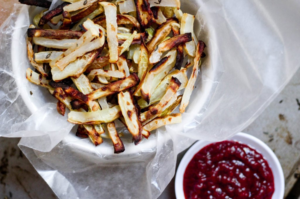
Daikon White: The radishes in this week’s box are Daikon radishes. The name “Daikon” is derived from the two Japanese words “dai” and “kon” which respectively mean “big” and “root”. Though the daikon radishes in this week’s box are not too large, if left to grow they can reach lengths of up to two feet and weigh up to 10 pounds.
Vegetable Feature: Daikon Radish

There are two kinds of radishes—the quick growing, spring varieties, and the slower-to-mature winter varieties. As a winter variety, the daikon radish is in the spotlight for our vegetable feature this week. Members of the mustard family, radishes were first domesticated in the Mediterranean during pre-Roman times. By 500 B.C., traders had carried them first to China and shortly thereafter to Japan where cultivation quickly became widespread. Early on, radishes were most commonly grown for their seeds, which were pressed into oil. Despite the multitude of varieties, all radishes share certain characteristics—a crunchy texture, with a unique sharp bite and a varying degree of pungency. They are rich in vitamins C and B, are an excellent source of potassium, calcium and iron, and are often utilized as a digestive aid, detoxifier and blood cleanser.
Daikon radishes, commonly referred to as Japanese horseradish or mooli, are rather easy to identify. A staple in Asian cuisine, daikon radishes are much milder than the traditional red radish. Their crisp, juicy texture is complemented by a sweet, slightly peppery bite. Interestingly enough, the thickest part of the root is the mildest, with pungency increasing as the root narrows. Although the typical daikon will measure between 15-20 inches in length, certain varieties can grow to be 36 inches long! Their grandiose size also makes Daikon radishes an effective cover crop, particularly for breaking up and aerating compact soil. The Sakurajima Radish is the largest Daikon radish variety in the world and it is grown in Japan. Some individual Sakurajima Radishes can weigh more than 60 lbs., but don’t worry, there is more than one radish in your box.
Winter radishes are, you might have guessed, built for storage. In order to preserve their quality, however, be sure to keep them sealed in plastic bags in the refrigerator. Preventing moisture loss is key to maintaining freshness! If stored properly, daikon will store for several weeks in your refrigerator.