
What’s In The Box with Recipe Suggestions
Orange Carrots: Ever considered making beverages out of carrots! Try one of the recipe suggestions below!
Cauliflower or Broccoli or Broccoli Romanesco: This week we continue to harvest from our fall Brassica crops.
Porcelain Garlic: Store garlic at room temperature until you are ready to use it. Adding a little garlic to your meals every day is a great way to support your immune system!
Jicama or Napa or Red Cabbage (not pictured): This is the root vegetable in your box with light brown skin. You can read more about it in this week’s vegetable feature article. This is a tropical vegetable and is sensitive to chill injury if stored in the refrigerator. We recommend keeping it at room temperature. The skin may be peeled or cut away with a paring knife to uncover the solid, dense, white flesh inside. It is typically eaten raw but may also be cooked. The cabbage is beautiful, but we did not have enough yet for every box. Don’t worry, there will be more in the future! Enjoy it raw in a salad or braise it with apples and fennel.
Jicama and Carrot Slaw with Honey-Lime Dressing
Pork Chops with Red Cabbage & Apples
Red and Napa Cabbage Salad with Braeburn Apples and Spiced Pecans
Red and Yellow Onions: If your household doesn’t use onions as frequently and you’re starting to accumulate a pile, consider making a large batch of caramelized onions. You can use the caramelized onions on sandwiches and burgers or eat them alongside grilled steak or pork chops. They are also delicious served with roasted vegetables, or add them to pizza, quesadillas or wraps!
How To Make Caramelized Onions
Red Jalapeños: Spice up this week’s jicama by pairing it with jalapenos in slaws & salsa. There are a few recipe suggestions below.
Jicama Slaw with Jalapeño Dressing
Mini Sweets Peppers: These multi-colored sweet peppers look like little bell peppers and are packed in a brown paper bag this week. If you’re packing a lunch to take to work or school, this is a great selection to include as they are easy to eat on their own or with a dip!
Hummus Stuffed Mini Sweet Peppers
Red Serrano Pepper: There are two serrano peppers in your box. It resembles a jalapeño pepper, although it is a bit more slender and longer than a jalapeño. As for the heat level, our crew members tell us they are a bit spicier than jalapeños. Use this week’s serrano and Jalapeno peppers to make a tasty tomatillo salsa!
Mango Shrimp Ceviche with Avocado
Orange and/or Red Italian Frying and/or Ace Bell Peppers: These red and orange peppers have a long slender shape and are sweet peppers. Peppers are an easy vegetable to preserve for later use. Simply wash and cut into whatever form you prefer (slices, diced, etc.) and put them in a freezer bag. Pull them out in the winter and add them to soups, stews and chowders, use them as a pizza topping, or sauté them and add them to eggs.
Marinated Cabbage & Sweet Pepper Slaw
Sheet Pan Greek Roasted Potatoes with Peppers & Feta
Spinach or Salad Mix: The baby lettuce and greens in this mix pair best with a light vinaigrette or a thin, creamy dressing. Toss just before serving so the greens do not get soggy.
Green Top Celeriac: This is a round root vegetable with a celery-like green top. Celeriac is in the same family as celery. The difference is that celeriac is grown for its root and celery is grown for its stalks. The stalks on celeriac resemble celery and have a lot of delicious flavor in them, however they are more tough and fibrous than celery and are not usually eaten as you would eat a celery stalk. Use the tops to add depth to a pot of stock or soup.
Creamy Broccoli Romanesco & Cauliflower Soup with Bacon
Butterkin Squash: Our winter squash fields did not produce like we had hoped this season, and you may notice that the squash is a little on the smaller side. Don’t worry, it is still delicious! Use this squash in any way you would use butternut squash.
Maple Butter Roasted Butterkin Squash with Hot Chili Oil
Cheesy Au Gratin Potatoes with Butternut Squash
Tat Soi: You can identify this vegetable by its dark green, rounded spoon-shaped leaves and light green ribs that connect the leaf to the base of the plant. Tat soi is in the same family along with bok choi and may be used interchangeably in recipes. Use both the ribs and the leaves, raw in salads or cook it by lightly sauteing or stir-frying.
Red Lentil Masala with Spinach
Vegetable Feature: Tat Soi
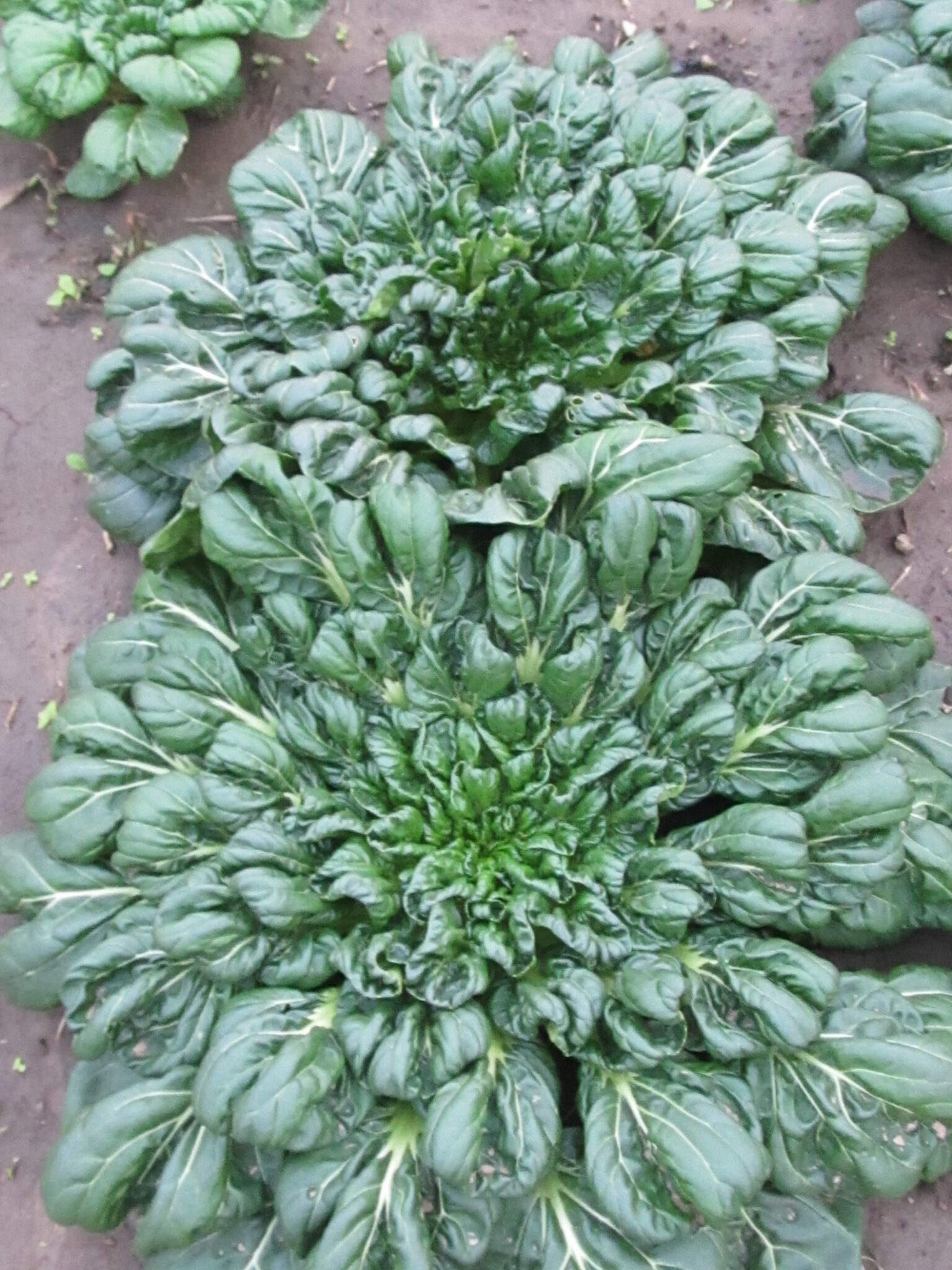
This week we are delivering one of our favorite late season crops, Tat Soi! Tat soi has dark green, spoon shaped leaves with light green stems that grow from a base. We grow tat soi as a baby green to include in salad and sauté mix, but when you allow tat soi to grow to full size it becomes a beautiful flower-like vegetable! It is related to bok choi and has a mild mustard flavor.
Nearly the entire plant, leaves and stems, is edible and you’ll find both to be tender enough to eat raw as well as cooked. Prior to use, use a paring knife to cut the stems away from the base. Wash the stems and leaves vigorously in a sink of cold water. If you’re using it to make a salad or stir-fry, make sure you pat the leaves dry or dry them in a salad spinner. If you’re using them in a soup or just wilting them, just shake a little water off of them.
As mentioned above, tat soi may be eaten both raw and cooked and we consider it to be one of nature’s fast foods. Aside from a little time to wash it, the prep involved with tat soi is pretty minimal. It is very similar to spinach and bok choi, so consider using it in recipes or preparations where you may use greens such as these. In its raw form, I like to use tat soi in tasty salads with lots of fall vegetables such as winter radishes (daikon or beauty heart), carrots, cabbage, etc and a simple, light vinaigrette. Turn it into a meal itself by adding nuts, seeds and/or meat such as grilled steak, roasted chicken or seared salmon. It may also be stir-fried, steamed and sauteed in just a few minutes. The stems may need a slightly longer cooking time, so it’s best to add those to the pan first. The leaves cook very quickly and need just a few minutes to become silky and tender. You may choose to use it in egg rolls, won tons, fried rice or added to soup.
We like to use tat soi in dishes with some Asian influences, and rightfully so as it pairs well with ginger, miso, soy, sesame, etc. But it also pairs well with other ingredients including lemon, beans, grains, pasta, winter root vegetables, etc. Of course you may also choose to incorporate it into casseroles, hot dishes, egg preparations such as quiche and scrambled eggs, pasta dishes, etc.
It’s best to store tat soi in a plastic bag or a covered container in the refrigerator until you’re ready to use it. I have stored this green in my refrigerator for several weeks, but we recommend eating it soon for the best quality.