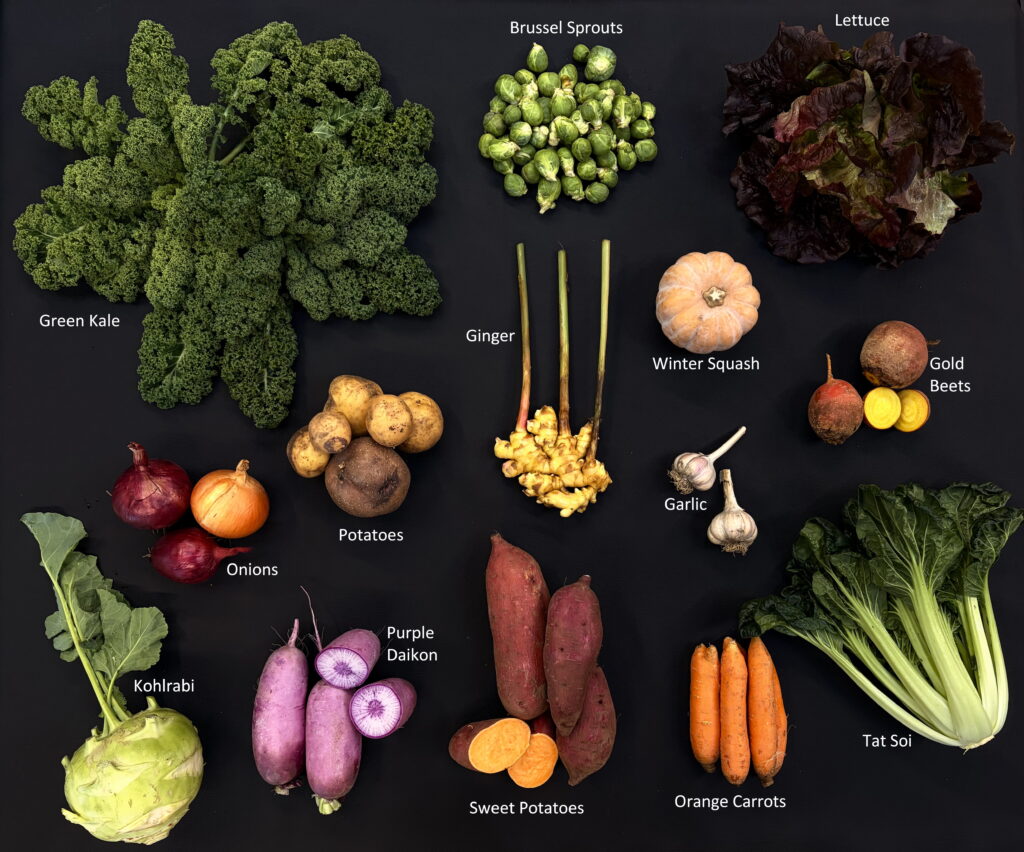
What’s In The Box with Recipe Suggestions
Italian Garlic: It’s Cold and Deer Tick season, so eat your garlic. Garlic has both immune boosting benefits as well as insect repellent capabilities. There are indeed studied health benefits to consuming Garlic, and there is slowly more research being done on Garlic for its insect repellent capabilities. Garlic has been used as a natural pest repellent in crop production for centuries. It has long been thought that this ability of Garlic to repel insect pests was due to its smell, but a recent study at Yale University has identified a chemical compound in Garlic that seems to negatively effects insects via taste.
Red and Yellow Onions: A fun way to make an Onion-Ring equivalent is to make a Blooming Onion. A Blooming Onion is a whole onion cut from the top down into multiple slices, still held as one unit at the base, such that it looks like a blooming flower. Then it is battered and deep fried. I have attached a Blooming Onion recipe below.
Green Kale: Kale has been shown to have eye, cardiovascular, bone, immune, and liver supporting benefits. That’s a lot of health benefits, so eat up! Some of the best ways to prepare and eat Kale are to sauté it or eat it raw after massaging it with a vinegar or salt rub.
Orange Carrots: Store carrots in the refrigerator in the bag we have packed them in and they will keep for several weeks! Use this staple ingredient in a pot of turkey noodle soup after the big Thanksgiving Day feast!
Bayou Belle or Murasaki Sweet Potatoes: This week you will receive either one of our two sweetest Sweet Potato varieties, Bayou Belle or Murasaki! The optimal storage temperature for sweet potatoes is 55-65°F and out of direct sunlight. If you do not have an environment at this temperature, it’s better to store them in a warmer location as they may experience cold injury if stored for extended periods at temperatures less than 55°F.
Garlic and Sage Sweet Potato Fries
Kohlrabi: Eating 1 cup of Kohlrabi contains just under the average recommended daily Vitamin C intake of 90 mg. I’m lucky my mother never knew this when I was a kid or I would have been eating four of these a day whenever I had a cold.
10 Delicious Kohlrabi Recipes to Make on Repeat
Masquerade Potato: This week we are sending out Masquerade Potatoes, or as I like to call them, Minnesota Viking Potatoes. Masquerade Potatoes have a gold and purple mottled skin and their flesh has a creamy, rich flavor. You can prepare and eat these Masquerade Potatoes in anyway you would other potatoes, but it can be nice to cook them in a way that preserves their skin’s unique appearance, such as baking them or using them to make Stuffed Potatoes.
Twice Baked Potatoes (Stuffed Jacket Potatoes)
Autumn Frost or Jester Winter Squash: This is a unique squash variety that has an attractive appearance with golden flesh like a butternut. It stores well and is versatile in its use. You may choose to cut it in half and use the center cavity to hold a flavorful filling. It is also an excellent candidate for roasting as well as using for baked goods including quick breads and pie. It is a shame since Jester Squash are so pretty, but they have a short shelf-life of up to two months, so if you were going to eat one squash and store the other, eat the Jester and store the Autumn Frost.
Roasted Squash with Maple-Ginger Glaze
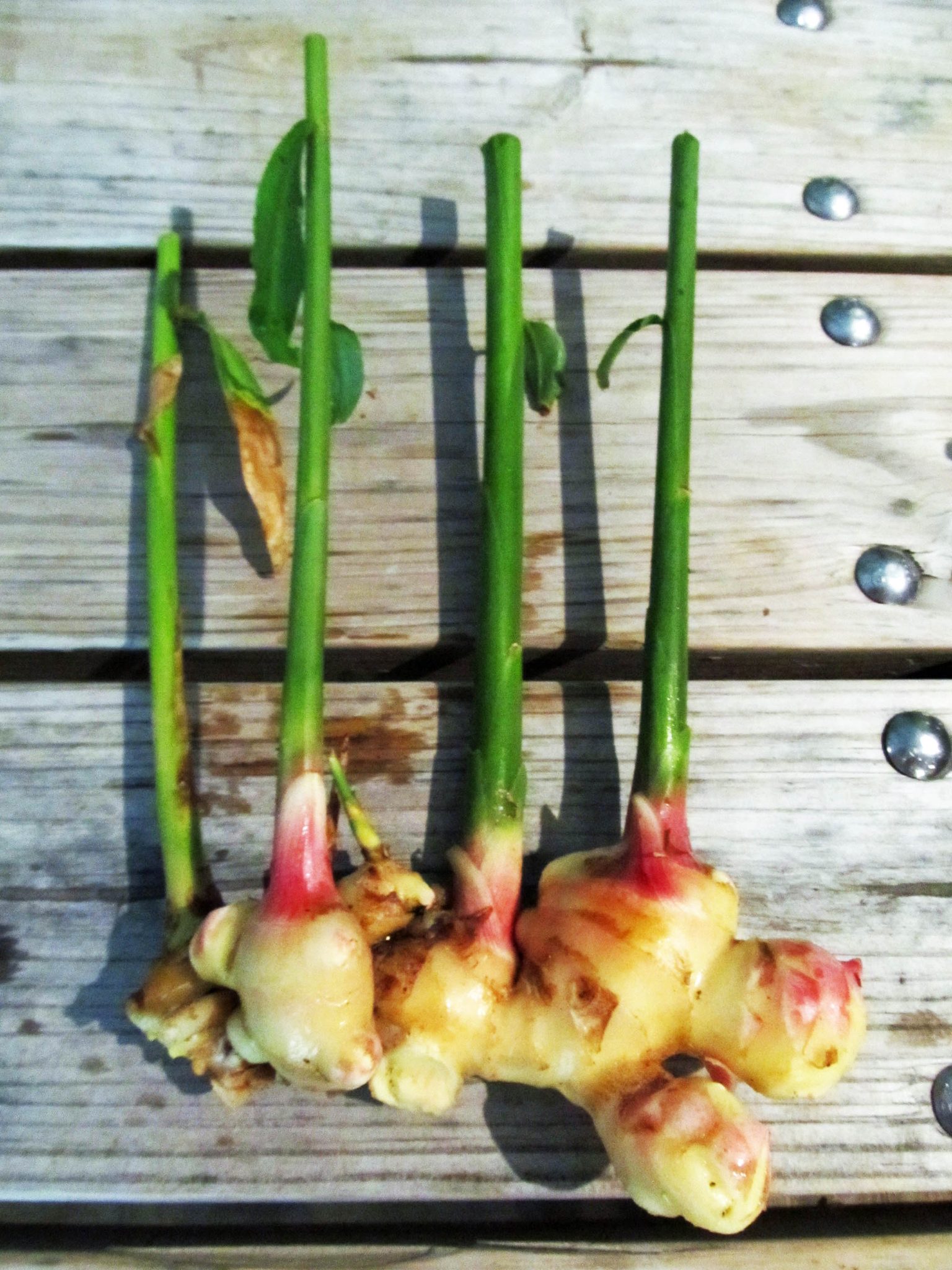
Ginger: The fantastic and exotic rhizome Ginger is this week’s Feature Vegetable! Learn more below about Ginger and how to use it.
Cherokee Lettuce: Cherokee Lettuce is a thick-leaved dark purple Summer-Crisp Head Lettuce. It is a slow-to-bolt lettuce that is on the lesser side of typical lettuce bitterness. You can prepare and eat Cherokee Lettuce as you would most other lettuces, in salads, sandwiches, wraps, etc.
Wilted Lettuce Salad With Hot Bacon Dressing
Tot Soi: Tat Soi is another nutrient-dense leafy green in this weeks CSA Box. You can use Tat Soi raw in salads as well as cooked in soups or in sautéed leafy green dishes such as the above Kale recipe. Store Tat Soi dry, in an open plastic bag in your crisper drawer.
Tatsoi Salad with Sesame-Ginger Dressing
Brussel Sprouts: Brussels sprouts grow in a variety of sizes, and you can have sprouts on one stalk ranging from the size of a thumbnail to large ones at the top of the stalk that are as big as a golf ball! When cooking sprouts, you may leave small sprouts whole. If you are working with a variety of sizes, cut the larger sprouts into smaller pieces so they cook more evenly with the smaller ones.
Gold Beets: Golden Beets are considered sweeter and more mild than Red Beets. You can use Golden Beets in all the same ways you would use Red Beets such as roasting and steaming.
Purple Daikon: These beautiful little Daikon carry the purple color through to the inside of the daikon, streaking the inner white flesh. Enjoy purple daikon in any way you would use white daikon, in salads, stir-fry, pickled or as a condiment.
Feature Vegetable: Ginger
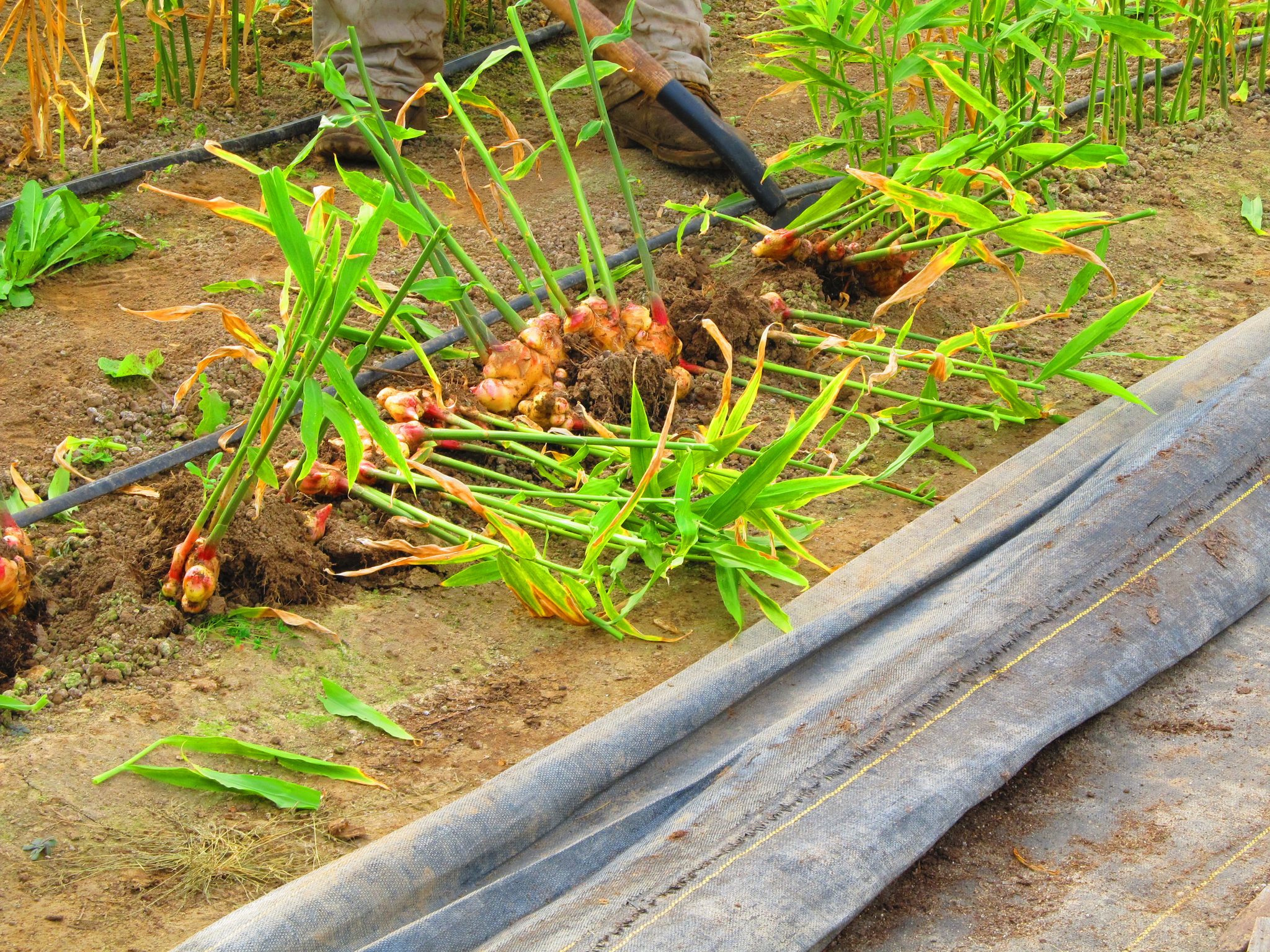
This week we’re featuring Fresh Baby Ginger, a tropical plant we have been growing for just shy of fifteen years! Ginger has traditionally been grown in the warmer climates of Southeastern Asia as well as South America, and the main producer of Ginger in the United States is Hawaii. Ginger is actually a rhizome, which is a stem that grows horizontally underground. It produces roots to anchor it and sends up shoots to grow into foliage above ground as it grows and expands. As you may have guessed, due to our cooler northern climate, the only place we are able to grow Ginger is in our greenhouses. Despite the use of our greenhouse, we still are not able to grow fully mature Ginger, hence the term “Baby Ginger.”
If you have ever bought Ginger at the grocery store, odds are that was mature Ginger shipped in from China or Hawaii. Our “Baby” Ginger has a few different qualities to it than Mature Ginger. Baby ginger has a very thin skin with some pink coloring, especially at the points where the stems have grown from the main rhizome. This is very different from the thick, brown skin you are likely most accustomed to seeing in the store. This thinner skin of the Baby Ginger lends to the Baby Ginger not being able to store as long as mature Ginger. Baby Ginger should be used within a week or so, and it is best to not store it in your refrigerator. Though the ideal storage temperature of Ginger is around 55 degrees, if you can’t provide an environment with that temperature, it is better to leave it at room temperature than to put it in the fridge as leaving it in the fridge will cause it to become rubbery.
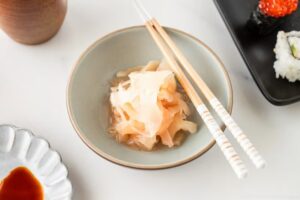
We also chose to leave some of the stem attached to the ginger. These stems are also edible, although the flavor is milder than the main rhizome. A great way to use these Ginger Stems is to make a tea from it. This can be done by simply cutting the stems into chunks half an inch to one inch in length and then placing them in boiling water. As is the same in making any tea, let the stems steep for at least 5 minutes and then strain them out. From stir fries and soups to teas and tinctures, the Baby Ginger rhizome has a plethora of potential uses. Ginger has been traditionally and still is widely used in many Asian cultures in dishes such as Japanese Ginger Pork, Gari (thinly sliced pickled Ginger), or Ginger Chicken. Unlike fully mature Ginger, the skin of Baby Ginger is very thin and tender which allows you to not need to peel it at all. Many dishes that call for Ginger will have you peel it and grate it, however, in your case, you may simply grate it and proceed with using it as called for. Ginger has a spicy, warm flavor which also makes it an excellent ingredient to pair with other warming spices and rich, comforting foods such as sweet potatoes, winter squash, mushrooms, broccoli, etc.
Ginger is used as both food and as medicine. As a medicine, it has anti-inflammatory properties, can sooth a whole host of gastrointestinal maladies, and helps to boost the immune system. Some research even suggests that some of the compounds in Ginger could potentially help prevent Neurodegenerative disorders such as Alzheimer’s and Multiple Sclerosis. Ginger has also been found to have antimicrobial effects on E. Coli, Staphylococcus Aureus (Staph), and Candida Albicans.
If you are not going to use it within a week whether as food or as medicine, there are a few ways that you can preserve your Baby Ginger for a later use. First, consider making a ginger syrup that you can keep in the refrigerator to use as a base to add to beverages or just eat a spoonful each day for an immune boost. You can also turn fresh ginger into pickled ginger such as the Gari mentioned above. Traditional Japanese pickled ginger that is commonly served with sushi is actually made with baby ginger, not mature Ginger. The pink hue of pickled ginger comes from that pink color you see on the skin of baby ginger. Baby Ginger is the preferred form of ginger to use when making Gari because it’s more tender and delicate compared to fully mature Ginger. Gari is very easy to make and will keep for up to six months in the refrigerator. Lastly, you can freeze fresh ginger. Just wash it well and cut it into smaller pieces, about the amount you may want to use at a time. Place the clean ginger pieces in a freezer bag and freeze it raw. When you have a recipe that calls for fresh ginger, pull a piece of the frozen ginger out and let it rest at room temperature for a few minutes. The ginger may be a little soft once fully thawed, but it will still possess its mildly pungent flavor. Just chop it up and use it whenever a recipe calls for ginger, or if you have an upset stomach!