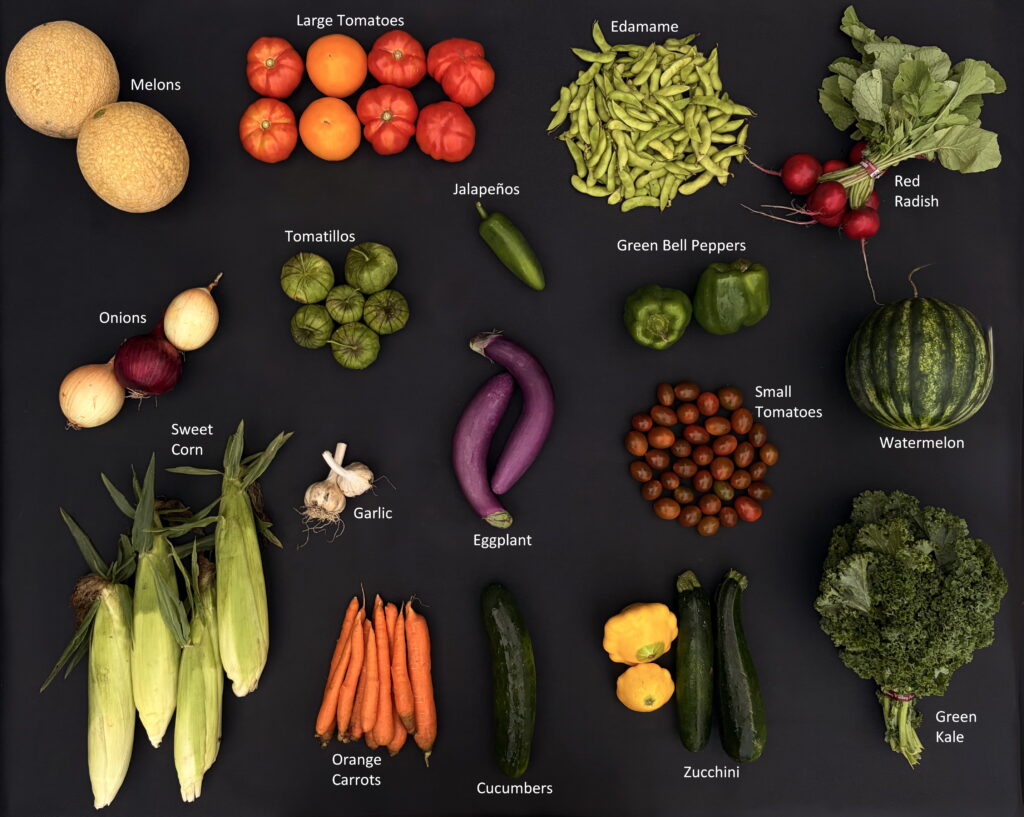
What’s In The Box with Recipe Suggestions
Orange Carrots: If you’re making a fresh tomato sauce or soup, add diced carrot for additional flavor and sweetness!
Cucumbers or Broccoli: Our cucumber production is starting to decline so some members will receive Broccoli this week instead! Honestly, the broccoli doesn’t need a full recipe this week. Use is as a quick snack with your favorite dip or add it to your stir fry!
Eggplant: This week we are sending the Lilac Bride variety. We will see the other varieties soon, but honestly, we have so many melons and watermelons we can’t fit it all in the boxes!!
Best Thai Red Curry with Eggplant & Tofu
Moussaka (Greek eggplant & beef casserole)
Italian Garlic: If you haven’t tried the Garlic Fried Tomatoes we have recommended in the past, we highly encourage you to do so. This is a quick, simple way to pair garlic and tomatoes. Enjoy this dish on its own as a side dish, serve it with fried eggs, toss in some pasta, or eat the tomatoes alongside crusty bread to soak up all the flavors from the oil. This recipe is delicious using any of the tomato varieties you may receive in your box this week.
Jalapeño Pepper: There is one jalapeño pepper in your box, so make sure you locate it! If you are not a fan of hot peppers, feel free to deposit your pepper in the swap box and share it with another member. Of course, you can always adjust the amount of heat from the pepper simply by using only the amount that is to your liking and/or by removing the white ribs and seeds which is where most of the heat is.
Spicy Deviled Eggs with Bacon & Jalapeños
Green Curly Kale: In the absence of lettuce during the summer months, kale can be a great leafy green alternative that will supply you with important, vital nutrients, but also makes a great base for a raw salad.
Sugar Cube Melon: In case you were wondering, we have lots of melons this week! This week you will see 2 in your share box and more as choice items at your sites!! While they are picked ripe, they will continue to soften and sweeten if left on the counter at room temperature.
Red and Yellow Onions: This week we are finishing up the ‘Delightful’ yellow variety and will switch to ‘Sedona’ partway through the pack. We are also switching to the Red ‘Monastrell’ onion, which are known for having red coloring that extends through to the interior.
Green Bell Pepper: Our pepper plants are loaded with fruit, but the only ones that are ready to start picking are these early bell peppers. This week’s pepper selection is just enough to give you a taste of what’s yet to come. Diced green bell pepper is a great addition to scrambled eggs or pan-fried breakfast potatoes!
Breakfast Potatoes with Peppers and Onions
Korean Peppers: There are about 4 ounces of these red-hot peppers for you in a paper bag. This pepper is a traditional Korean variety used, in its dried form, to make kim chi. This pepper may be used fresh, or you may dry it. We like these peppers because they are flavorful with a bit of sweetness to balance the heat. A simple way to preserve them for use over time is to make salt-cured chiles (recipe below). You can read more about this interesting pepper in our previous vegetable feature article.
HVF Fresh Korean-Garlic Chile Sauce
Sweet & Spicy Gochujang Butter Popcorn (Korean Chiles)
Green Top Red Radishes: Use the roots in salads, munch on them raw with a bit of salt, or if you prefer a milder radish flavor you can roast them. Don’t let those bountiful tops go to waste! Add them to a stir fry, incorporate them into a green drink, or turn them into pesto!
Butter Glazed Roasted Red Radishes with Fresh Herbs
Sweet Corn: Remember to keep sweet corn cold and eat it within a few days to preserve sweetness. There’s more value to sweet corn than just the kernels of corn! Did you know the corn silks can be used to make tea and the cobs, once the corn is cut off, are a great addition to vegetable or meat stock!
Tomatillos: This is the green fruit with an outer husk. The outer husk should be removed and discarded as it is not edible. Read more about this selection in our vegetable feature article this week.
Vegetable Enchiladas with Tomatillo Cream Sauce
Roasted Tomatillo & Chickpea Curry
Pork Chile Verde (Pork with Tomatillo Sauce)
Small Tomatoes: You will receive one of three varieties including Sun Orange, Red Grape, or Chocolate Sprinkles.
Variety of Large Tomatoes: Another big week for tomato harvest. Store tomatoes at room temperature and monitor for ripeness.
Spice-Braised Lentils & Tomatoes with Toasted Coconut
Watermelon: Store your watermelon in the refrigerator and eat within a few days. The varieties we grow are seedless, however you may see some immature seeds called “pips.” To get 100% use out of your watermelon, pickle the rind, or add it to a stir-fry!
Green and/or Italian and/or Yellow Scallopini Squash: We will continue harvesting zucchini as long as the plants are producing and as long as the first frost holds off! But the reality is that this crop will be coming to an end in the near future. Now is the time to make your favorite zucchini recipes before the season ends!
Vegetable Feature: Eggplant
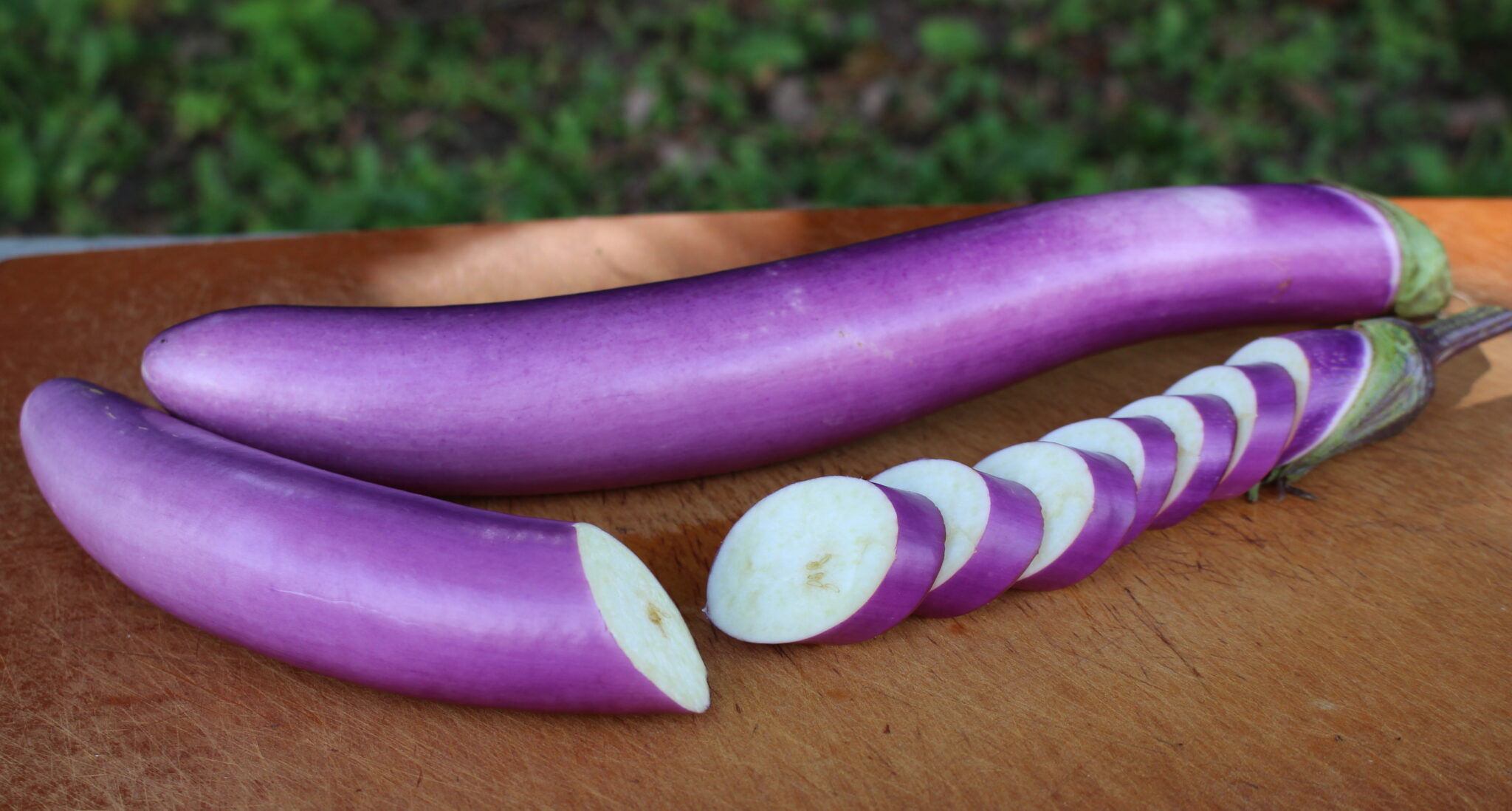
Eggplant is a member of the nightshade family, along with potatoes and tomatoes. It is a beautiful crop, in their peak, the plants can be loaded with beautiful glossy fruit hanging heavily on the plant. There are many varieties of eggplants ranging in size from small round eggplants the size of a golf ball to large globe eggplants weighing several pounds. While there are many varieties to choose from, we have narrowed our lineup of eggplants to our three favorite varieties including Lilac Bride, Listada and the traditional Black eggplant. Each variety has slightly different characteristics which may impact your decision as to how you want to prepare them. If you’re not familiar with the different varieties, we have included a brief description of each one below. We encourage you to refer to these descriptions each week to help you identify which eggplant you receive as this information will also help you choose the most fitting recipe for what you have received!
Black Globe Eggplant: This is the most familiar variety of eggplants. It is characterized by dark, purple skin that looks black. It is best used in dishes like Eggplant Parmesan, lasagna or to make dips, etc. This variety will also hold up on the grill or if roasted.
Lilac Bride Eggplant: Lilac bride eggplant is long and slender with lavender to dark purple skin and white flesh. It is best used in Thai curry dishes, stews, or any other preparation where you want the eggplant to hold its shape better. The skin is tender enough you don’t need to peel it.
Listada Eggplant: Listada is characterized by a small globe shape with dark purple/ magenta skin streaked with white stripes. It is characterized by dense “meaty” flesh that holds up very well with grilling or roasting.
Eggplant is grown all around the world and is a part of the cuisine in many different cultures. As such, there are many different options for how you may choose to prepare it. It is important to note that eggplant should be cooked before eating it. Eggplant has a mild flavor and soft, silky texture when cooked, which is what makes it unique. While eggplant doesn’t have a striking flavor, its texture is what makes it a sponge that is able to absorb other flavors. Eggplant pairs well with other vegetables including tomatoes, onions, garlic, peppers, zucchini, potatoes, lentils, and chickpeas. It also goes well with flavorful olive oil, tahini, herbs such as basil, parsley and mint, and spices including cumin, coriander, sumac, and cinnamon. It is a friend to dairy products including yogurt, cheese (feta, Parmesan and mozzarella), and cream and fruits including lemons and pomegranate.
Eggplant can be prepared using a variety of cooking methods including pan-frying, baking, grilling, and roasting. Many resources will tell you to salt eggplant before cooking it to remove bitterness. While some older varieties were bitter, the new varieties we grow have been selected because they are not bitter, thus you can skip the salting step for that reason. You may still choose to salt eggplant to soften the flesh, so it doesn’t absorb too much oil. Most of our varieties of eggplant have skin that is tender enough to eat, thus you do not need to peel them.
When you are reading recipes, you’ll find they often refer to “1 medium eggplant.” Well, eggplant grows in a wide range of sizes. So how do you know what “1 medium eggplant” is actually referring to? Well, the best guideline we can offer you is that most recipes are likely to refer to about one pound of raw eggplant. If you have a larger eggplant than you need to use at the time, we encourage you to cook it all (if possible) at one time and then store any remaining unused portion. If you have some extra grilled eggplant, you can add it into a vegetable wrap, scramble it into your morning eggs or add it as a pizza topping. If you choose to roast eggplant and puree the flesh, you can store any unused pureed portion for another use or you can freeze it. When you are ready to use it, just pull it out of the freezer, thaw it and it’s ready to turn into a dip, soup or even a chocolate dessert! That’s right, eggplant puree can be used in baked goods similarly to how we use mashed bananas! If you don’t believe me, refer to this decadent recipe for Chocolate Eggplant Torte.
Eggplant does not store terribly well and is best stored at a temperature of about 45-50°F. This is warmer than your home refrigerator should be set at, thus we recommend storing your eggplant on the kitchen counter and use it within 2-4 days. If it starts to get a little soft or dehydrated looking, it’s still good, however we recommend you use it as soon as possible.
Farm Update
This week marked the end of ‘Meteorological summer’ on Monday, moving into their Autumn season. This will also mark some upcoming changes in our share boxes. We are winding down on Sweet corn, cucumbers, zucchini and watermelon. However, that shift brings the anticipated start of autumn boxes. We will start seeing more eggplant, leeks, potatoes and soon even celeriac. Rumor also has it they will be harvesting Jicama either later this week or early next week. We should also start seeing some fall ‘greens’ including arugula, spinach, sauté mix and in a couple weeks, maybe even some salad mix!