What’s In The Box with Recipe Suggestions
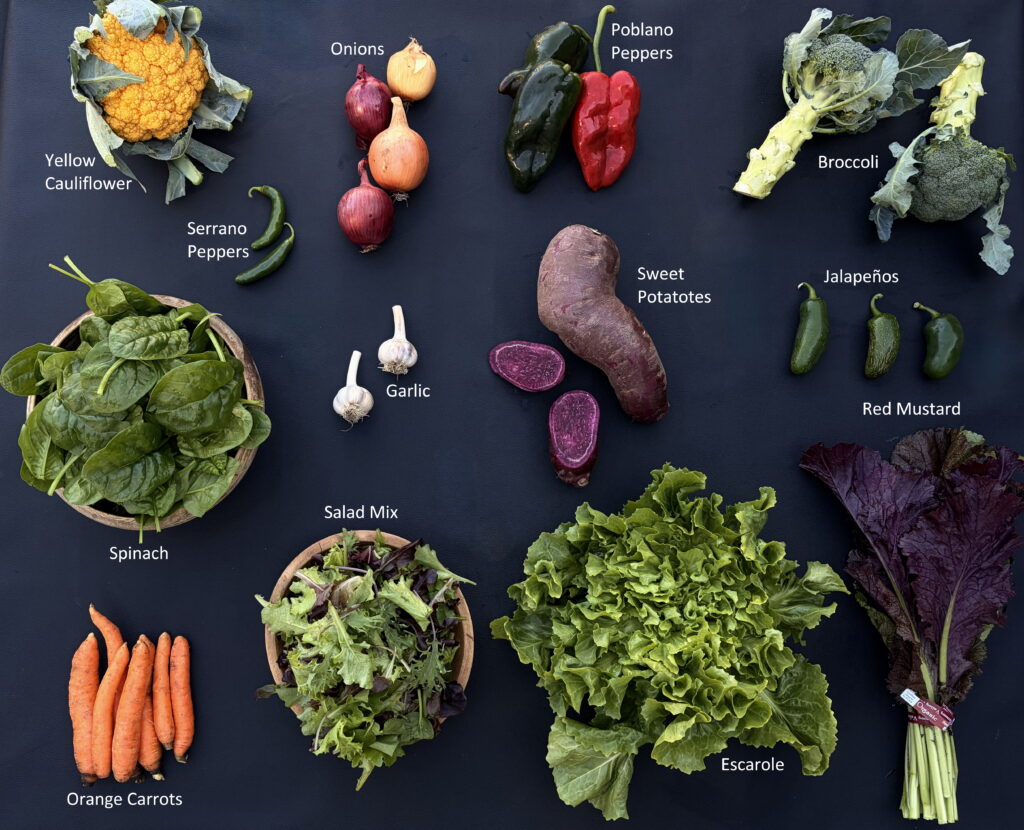
Purple or Yellow Cauliflower: As many of you may know, the little buds that we eat on cauliflower and broccoli are just that: little buds. The Broccoli and cauliflower that we eat are essentially just stems with a large bunch of immature flowers on top. Given what broccoli and cauliflower are, the name cauliflower is a perfect name since the name is derived from the two Latin words: caulis and flos, which translate to “stem flower.”
Baked Cauliflower Cheddar Fritters
Roasted Cauliflower & Lentil Tacos with Creamy Chipotle Sauce
Broccoli or Romanesco: Most people know how to use the florets, but what can you do with the stem? Well, first peel away the outer layer of skin that is a bit thicker. Using a fine grater, shred the broccoli stem. Add the shredded broccoli stem to raw salads, stir it into soup, or add it to meatballs.
Italian Garlic: Roasted garlic makes a bold and tasty base for a salad dressing that would be great on this week’s Salad Mix!
Red Jalapeños: If you are looking for an idea of what to do with your Jalapenos that does not involve bacon and is not making them into a hot sauce, you could try this slightly out-there idea of making Jalapeno Pepper Jam. Bonus: making this jam does not involve canning.
Red Serrano Pepper: If you are looking for the most crunch in your hot peppers this week, go with your serrano peppers over your Jalapeños.
Red and Yellow Onions: My favorite way to eat onions is to make them into extra crunchy onion rings. Try out the recipe below!
Homemade Extra Crispy Onion Rings
Poblano Peppers: One could consider Poblanos Peppers to be a mild hot pepper. If it is helpful in determining how you want to use all of this week’s peppers, a heat scale from most mild pepper to the hottest pepper would be Poblano, Jalapeño and lastly Serrano.
Escarole: In this week’s box there will be a head of Escarole. Though it looks very much like a head of lettuce, it is in fact NOT A LETTUCE. Escarole belongs to a family of vegetables called chicories. The leaves of Escarole are much more loosely splayed out in comparison to most head lettuce, and Escarole is usually more bitter. However, the “heart” or innermost leaves of Escarole are less bitter and posses an undertone of sweetness. Just as with Carrots, the frost and cold helps to sweeten Escarole. Due to its more bitter profile though, Escarole is rarely eaten raw and is generally eaten cooked. Cooking Escarole helps to dissipate its bitterness. Traditional cooking and consumption of Escarole is predominantly of European origin. Dishes such as Escarole and Beans, or Italian Wedding Soup are some traditional Escarole meals that one could try. Otherwise, visit our website for more information on this leafy green, and recipe ideas for other great ways to cook it. A final note and recommendation: the leaves of Escarole are curly which can make it difficult to wash without separating the leaves. We recommend that you be sure to give your Escarole a second wash and perhaps pull away the first few leaves to better rinse out any dirt that may be inside the curls and folds of the outer leaves.
Scarola e Fagioli (Escarole & Beans)
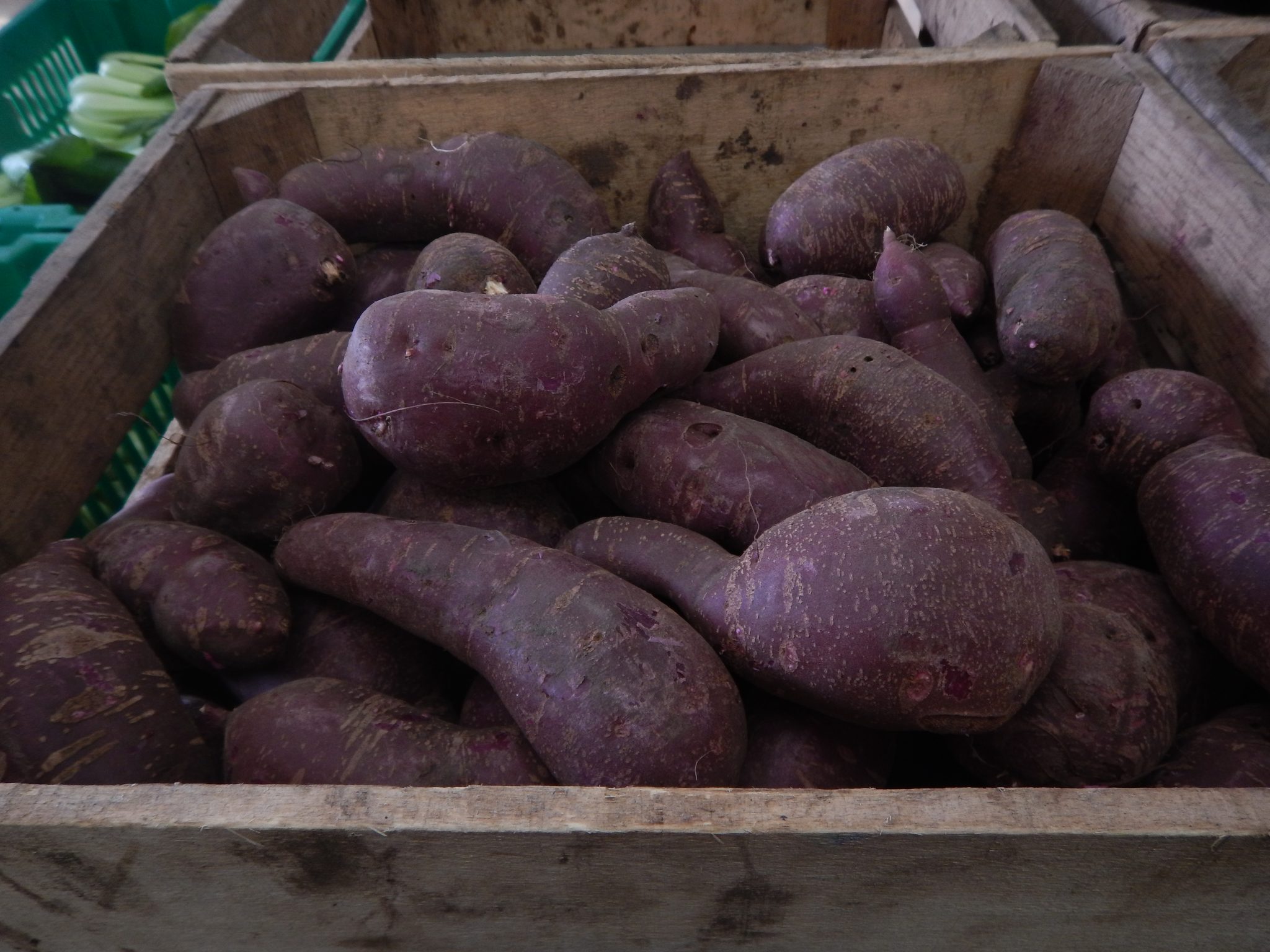
Purple Splendor Sweet Potato: This week we are beginning to deliver our first sweet potatoes, our Purple Splendors! Check out this week’s Feature Vegetable recipes and our website for other great recipes for Sweet Potatoes.
Orange Carrots: If you ever intend to grow carrots, it can be helpful to sift the soil that you are going to plant them into, trying to remove any rocks, wood chips or hard clumps of dirt. When meet with these objects, carrots can try to grow around them leading to misshaped or split carrots. Otherwise, spare yourself the headache altogether and continue as you are, relying on us to provide you with high-quality organic carrots. This week’s carrot variety is called Bolero. Bolero Carrots are both sweet and they store very well.
Roma Tomato: This week, use your Roma Tomatoes to make homemade Gazpacho. Gazpacho is a cold soup beverage that originated in Spain in the region of Andalucía. Your box from this week will also contain a few of the other ingredients needed to make gazpacho, and though it is not usually included in a gazpacho recipe, you could include one of the hot peppers in your box to spice this drink up a bit.
Salad Mix and Spinach: There is always the “You can starve if you don’t want to eat your lettuce” method, but if you would rather the approach of making leafy greens appealing to your kids, make popsicles out of your salad mix or even your spinach. I have never tried them before, but honestly as a man who does not care for his leafy greens, I kind of like the idea.
Watermelon and Lettuce Popsicles
Red Mustard: I suppose one could spice up the popsicle recipes above by adding a Red Mustard leaf or two, but I would think that those popsicles are already adventurous enough as they are. Instead, I would recommend using your Red Mustard Greens in personal favorite dish of mine: Egg Fried Rice. They do not include it in the recipe linked below, but I would highly recommend adding a good-sized portion of bacon bits to this dish.
Spicy Mustard Green and Egg Fried Rice
Feature Vegetable: Sweet Potato
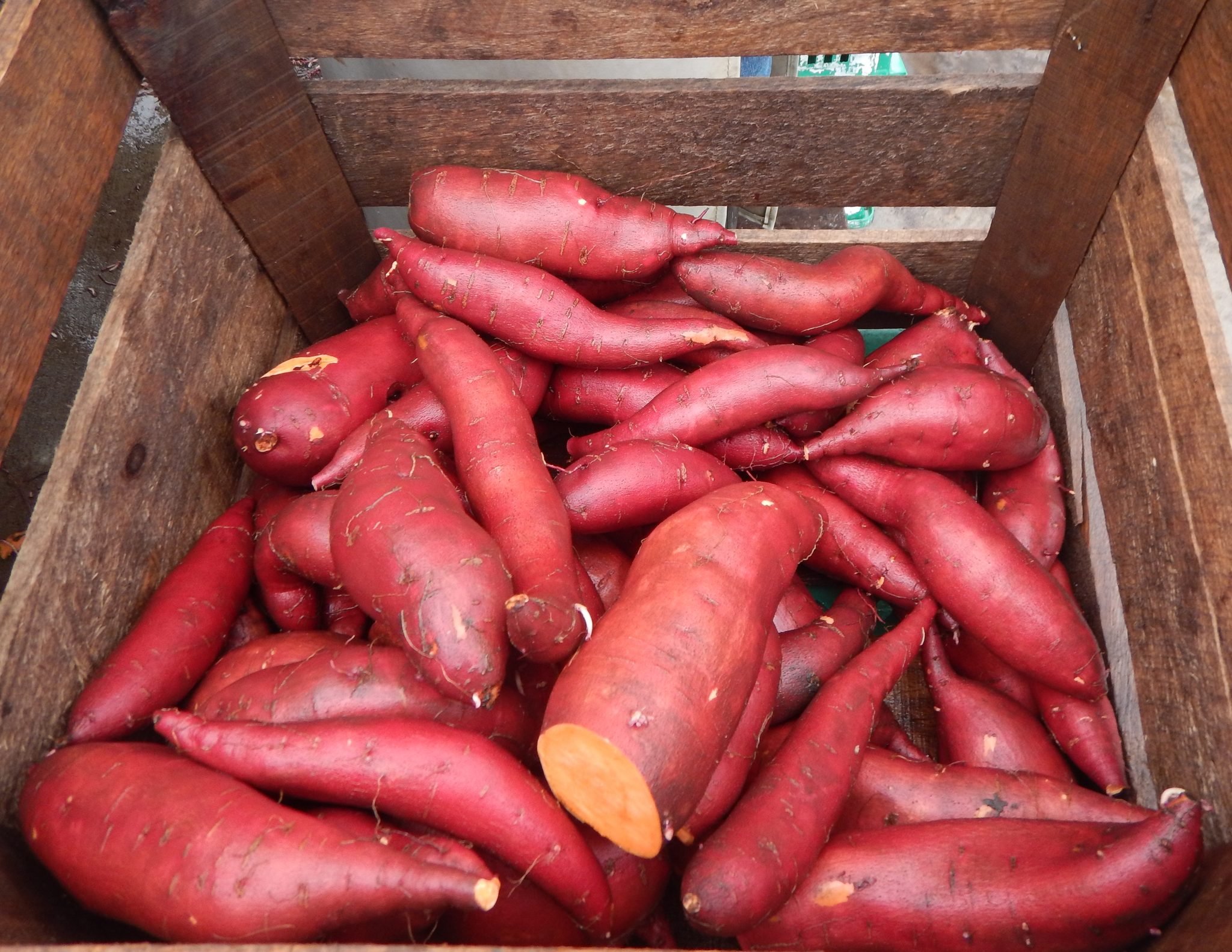
This year we grew four varieties of Sweet Potato: Bayou Belle, Covington, Murasaki, and Purple Splendor. The Bayou Belles have a purplish-red look to them. I would say that their skin looks very much like a red potato. As for their flavor profile, Bayou Belle are among some of the sweetest Sweet Potato varieties. When someone says sweet potato, the image that pops into most of our heads is that of a Covington Sweet Potato. Covingtons have a brownish red color and generally have a uniform shape of a consistent increase in girth down the tuber until roughly 2/3rds down where it begins to decrease sharply to a point. Also following our standard experience with Sweet Potatoes, Covingtons are considered to be the average of sweet potato flavor and sweetness. Murasaki have more of a reddish-purple skin color, that is, they generally are more purple than the Bayou Belles are. Unlike many other varieties of Sweet Potato, Murasaki have a very different internal color than their exterior color. The interior flesh of the Murasaki is a light ivory color, and it has a more subtle sweet flavor to them in comparison to a Covington. Purple splendor are just that, purple. They are typically short and thick and not only do they have a dark purple exterior, but they also posses a purple interior as well. Purple Splendor is typically not a very sweet Sweet Potato, however, Purple Splendor has high levels of dark purple anthocyanins which reduce inflammation in the body and boost immune system strength.
At this time, the common belief of where sweet potatoes originated is that they were domesticated 5000 or more years ago in Mexico and Western South America. Today, China outstrips all other countries in sweet potato production, growing roughly 50 million tons each year. To give you an idea just how many more Sweet Potatoes China grows than the rest of the world, the 2nd largest Sweet Potato producer in the world is the country Malawi, which grows an average of 7.5 million tons of Sweet Potatoes per year. And then there is us in the United States standing as the 9th largest producer of Sweet Potatoes, growing 1.3 million tons per year. Within the United States, most of our Sweet Potatoes are grown in North Carolina, Mississippi, and of course, California.
Here in Wisconsin at Harmony Valley Farm we started harvesting our sweet potatoes on Friday, October 9th, and we began curing them as soon as we had the available greenhouse to do so. We cure our sweet potatoes at temperatures of 85 – 90° and the same high humidity. Curing is a very important step because it will ‘toughen’ up the skin of the Sweet Potatoes so they can be more easily handled and have a longer storage potential. The curing process also converts the starches in the sweet potatoes to sugars, thereby making them a truly “sweet” potato.
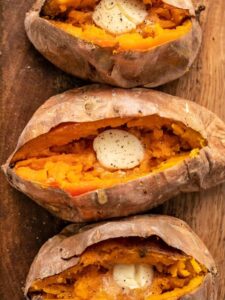
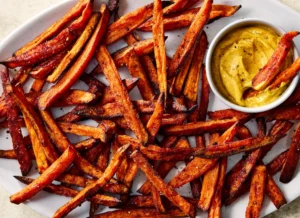
Sweet potatoes store very well, and they are so versatile that it’s hard to grow tired of them! They can be baked, roasted, boiled, pan-fried, and even deep-fried. You can dice them up and add them to soups and stews. My personal favorite way to prepare and eat sweet potatoes is to slice them up and bake them into crispy fries! You can also bake them and then scoop the flesh out and puree it. The puree can then be used in baked goods, desserts (sweet potato pie or cheesecake!), breads, or as a spread or ingredient for pizza, quesadillas, lasagna, etc.
If you are not going to eat them right away, the ideal storage temperature for sweet potatoes is about 55-60°F. If you want to store sweet potatoes well into the winter, try to find the spot in your home that is closest to this temperature range. Sweet potatoes are sensitive to cold temperatures, so if you don’t have an ideal storage location it’s better to err on the side of a little warmer instead of a colder temperature.
We have a lot more sweet potatoes to come your way! We would love to hear your feedback on which varieties are your favorite.
Farm Update
Dear CSA Members and Friends,
This has been a challenging year on the farm in many ways. Even so, many of you told us how delicious and beautiful the produce has been, and how much variety you’ve found in your boxes-with more than ten different vegetables in each one. Your kind words are a boost to all of us, and we’re grateful that you took the time to share them.
One of the reasons that this has been a difficult year is because of my health. In May, I was diagnosed with lung cancer, and I have just recently completed my chemo and radiation treatments. Rafael, Kelly, and team did an amazing job of running the farm while I was dealing with the side effects of the treatments. The doctors are optimistic that the cancer was caught early and that the treatments provided a cure. I am optimistic, as well, and am looking forward to being back and more involved with the farm the rest of this season and beyond.
Other challenges have been due to personnel changes. Andrea Yoder left the farm in May of 2025, but she has been a huge support for me recently. She was a powerhouse who took responsibility for many aspects of farm management. While we miss her, we wish her well in her new ventures. Our bookkeeper, Kelly left us as of October 1st after 16 years of support of HVF. Many of you had contact with her over the years and she stepped up to carry on with some of the responsibilities that Andrea had in addition to maintaining the bookkeeping work. While we have hired a new bookkeeper and other staff, it takes time for new people to learn the many details involved in running a diversified farm and a CSA. We hope you will be patient and understanding with us all through this process.
And, as everyone is aware, costs have risen in nearly every aspect of our lives, including farming. Seed prices were up 15-20% last spring, fuel costs now double, everything we buy is up!
This has led to belt tightening beyond what we are typically prepared for. All of these rising costs will likely require us to raise our CSA price for next year. We know that price matters, and we’ll continue working to provide good value to our members.
I am so pleased and proud of how Rafael, his two oldest children, Adrian age 19 and Jimena 21 have grown into being a major part of our team and the rest of our farm team have stepped up to meet the challenges that this year has brought. I wanted you, our valued CSA members, to be aware of what we have been experiencing this year and to know that you are always upper most in our minds when we have difficult choices to make and challenges to meet.
We started CSA in 1993, 34 years of growing, packing and delivering boxes. We have weathered multiple floods, droughts and a pandemic without ever missing a box! Our CSA members were our best supporters and got us through some difficult times. That is why you are our top priority and will continue to be in the future.
I’ve only ever wanted to ’change the world’ in a positive way. This farm is my life’s work and I am both grateful and proud that it continues to provide healthy food for so many people in our neighboring communities.