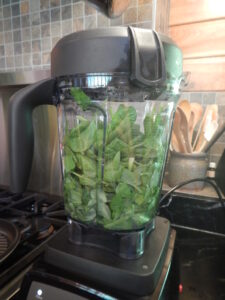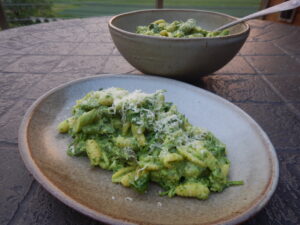

What’s In The Box with Recipe Suggestions
Arugula: Our baby arugula is pungent and spicy, which is a nice balance to fatty foods such as flavorful oils, cheese, meat, olives, etc. It may be used in raw salads or add it to the end of a warm, savory recipe.
15 Minute Thin Crust Pizza with Arugula & Hot Honey
Asparagus: Store asparagus upright in a glass of water or wrap a moist towel around the base of the spears to keep them fresh and crisp. While you may eat asparagus raw in salads, it is most often cooked. Try it roasted, grilled or simply sautéed!
Charred Asparagus with Horseradish Dip
Parmesan Asparagus Pastry Twists
Bok Choi: Prepare bok choi in a way similar to head lettuce. Separate the individual leaves from the base of the plant and wash well in cold water before using them. There is about 1.5 pounds of bok choi in your box. Store bok choi in a plastic bag or closed container in the refrigerator to extend its shelf life and keep it from dehydrating.
Sesame Ginger Grilled Bok Choi
Kailan Branching Broccoli: Branching Broccoli is similar to Broccoli in appearance and flavor but has a slightly bitter taste. It has a thick central stalk, glossy blue-green leaves, and small florets that emerge from the center. All parts of the plant are edible and nutritious, rich in vitamins A, C, and K, and minerals like potassium, calcium, and magnesium.
Kailan (Chinese Broccoli) with Garlic Infused Oyster Sauce
Chinese Broccoli (Gai Lan) Two Ways
Burdock Root: We beg you to give this a try, don’t just put it in the Swap box this week!! Dr. Axe wrote an article on Burdock: “In Traditional Chinese Medicine, burdock fruit has been used for thousands of years. It’s typically associated with the lung and stomach meridians, known to cool internal heat, and commonly used for supporting skin health.” Another quote from webmd.com: “The flavonoids and polyphenols in burdock root may help slow tumor development as well as reduce pain experienced from some cancers, such as breast tumors. — Burdock root’s anti-inflammatory and antibacterial components may help different skin conditions, like wrinkles, eczema, acne, and psoriasis when applied topically.”
Not only is this an amazingly healthy root, but we also find it delicious too! Kelly’s family likes both the fries and chips (recipes below) but she also uses it in soups, stews and shredded in muffins (note that you may need a little more liquid in the muffins than if you used parsnips or carrots). Use it like any other root vegetable and enjoy the earthy flavor.
Ginger-Infused Burdock Root Soup
Burdock Root and Mushroom Risotto
Cilantro: Enjoy cilantro in salads or use it as a garnish for grain bowls, tacos and more! Before using it, remove the twist tie and wash the cilantro well in a sink of cold water. Spin or pat the cilantro to remove excess water before using it.
Cilantro Lime Slaw to put on top of Life-Changing Crispy Baked Fish Tacos
Green Garlic: If you’re not sure how to tell the difference between green onions and green garlic, look at the green tops. The greens on green garlic are flat while the green tops on a green onion are round. Green garlic is the form of garlic we use in the spring, so substitute it for clove garlic in any recipe!
Potato Onions: This is a multiplier onion that we plant in the fall from “sets” and harvest in the spring as one of our earliest green onion varieties. These have rounded tops, unlike the green garlic that has flat leaves. Use both the green tops and the lower portion of the onion.
Drop Biscuits with Green Onions
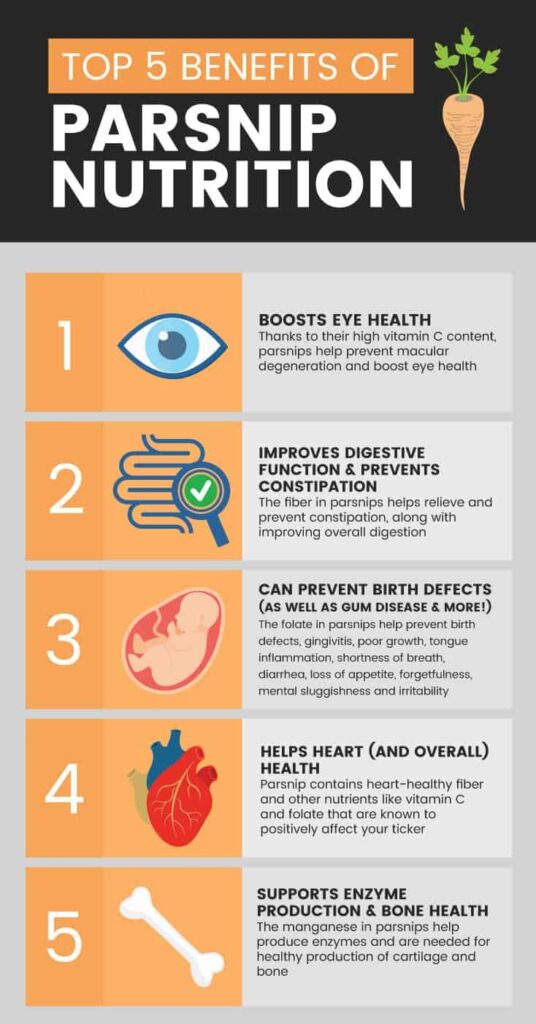
Overwintered Parsnips: Feeling like you have received too many parsnips this spring, don’t give up on them yet, this is the last week you will see them until fall. Don’t forget they have a lot of great nutritional properties. Make sure you check out these articles from www.draxe.com and www.healthline.com. Quote from Healthline: “parsnips are a great source of vitamin C, vitamin K, and folate, as well as several other important micronutrients.” They store amazingly well in the freezer. Wash, slice or shred, blanch, dry and freeze. Kelly likes to prepare for winter baking, so she freezes the parsnips in 1 and 1.5 cup containers. This is the amount used in her family’s favorite recipes. Pull out and thaw a little before using it and enjoy!
Parsnip Pie – We haven’t tested this recipe yet, but it is one the list soon. If you try it, let us know!
Pea Vine: This vegetable is the precursor to peas in the pod! This is a specific variety of peas which does produce some small peas; however, we harvest it before the pods set on and use it as a bunched green. Read more in the vegetable feature this week.
Green Top Diana Radishes: These are the purple and white radishes in this week’s box. Don’t forget to eat the radish tops as well. Lightly sauté sliced radishes and toss in the chopped green tops at the end. Stir together with some salt and pepper for a quick and tasty side dish.
Radish Top Pasta with Chickpeas & Parsley
Red Radishes: These are the round red radishes. If you don’t like the peppery bite with the radishes, cook them! Lightly sauté or roast them. When cooked, radishes lose their peppery flavor and become mild and slightly sweet in flavor.
Sauté Mix: The greens in this mix are tender enough to eat as a salad, or you can lightly cook them.
Mixed Greens Salad with Sesame Ginger Vinaigrette
Evergreen Salad in Sunflower Thyme Marinade
Spinach: This beautiful mixture of green and Red Tabby spinach. is the first of our spring planted spinach. The leaves are more tender and delicate, perfect for use in fresh salads dressed with a light vinaigrette or a thinner creamy salad dressing.
Spinach Mandarin Salad with Honey Balsamic Dressing
Fully Loaded Spinach Salad with Bacon & Blue Cheese
Spinach Quesadillas with Spicy Pinto Beans
Baby White Turnips: These little turnips are also known as “salad” or “hakurei” turnips. You’ll find them to be tender, sweet and do not need to be peeled. The greens are also edible and may be used in salads or wilted down in soups, stir-fry, soup, etc. One simple way to prepare them is to lightly sauté the turnips in butter, then cut the greens into bite-sized pieces and wilt them on top. Add a little salt and pepper and you’re done.
White Turnip Salad with Miso Ginger Vinaigrette
Choice: Herb Packs—This week we have sent herb packs for any members receiving Every Other Week Brown Week shares, flex plan share that did not have a delivery last week, and special requests for an extra pack.
Vegetable Feature: Pea Vine
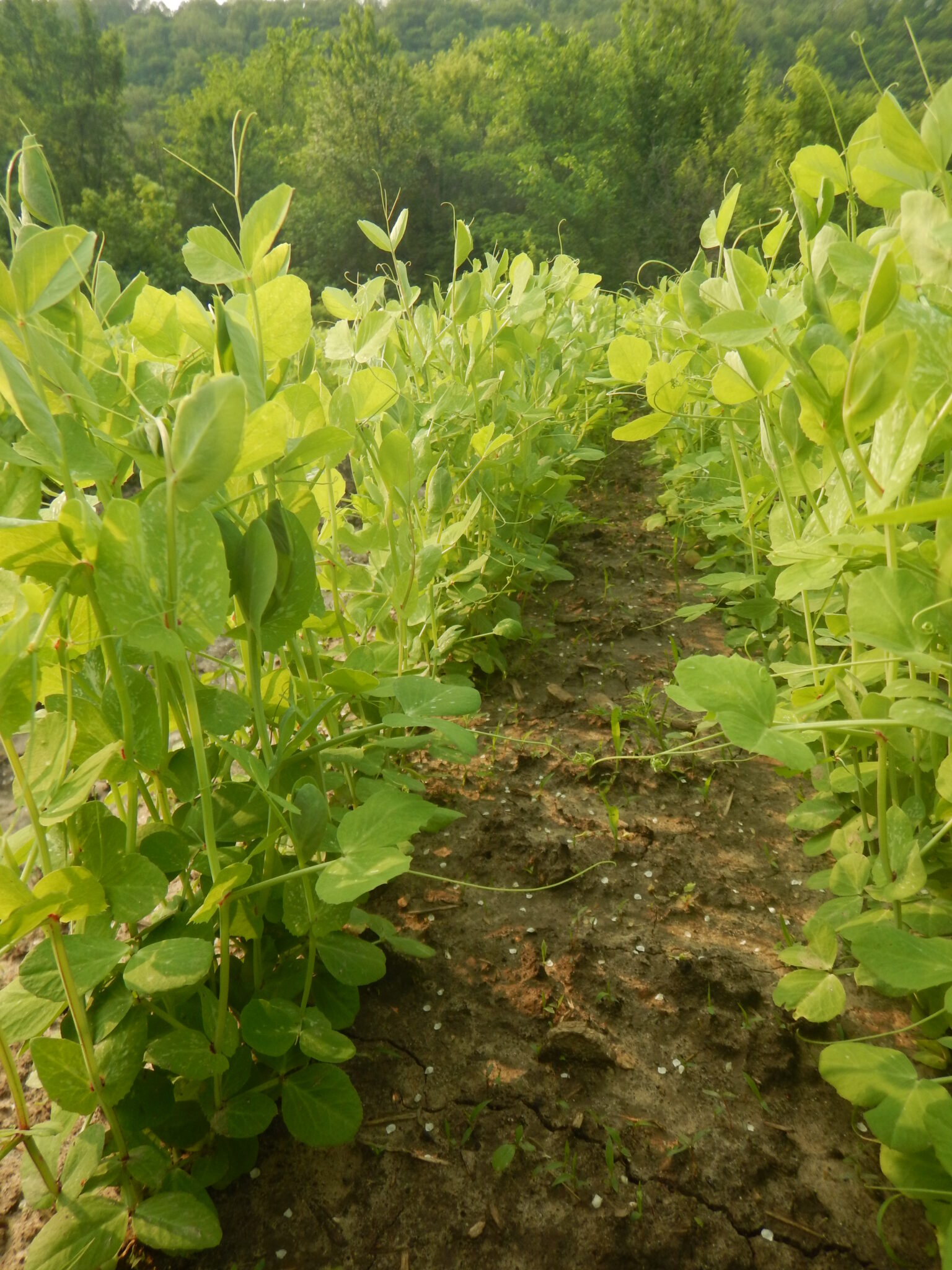
Pea Vine is an immature pea plant that is harvested before the vine starts to develop blossoms. It has a mild, sweet pea flavor and may be eaten raw or lightly cooked. We look forward to pea vine every year because it has such a bright, gentle pea flavor and is a nutrient-dense green that seems to leave you feeling invigorated and refreshed!
While the tendrils and leaves are tender, the main stem can sometimes get-tough depending on how mature the plant is at harvest. This week’s pea vine is at an early stage and is mostly small and tender. The upper stem is still tender while the lower portion may be a little coarser. In past years we’ve had members comment that the pea vine is “stringy.” Here’s how we tackle this issue. If you find this to be the case, pick the tender leaves, tendrils and thin stems off the main stem. Admittedly, we don’t like to spend a lot of time sorting through a bunch of pea vine, and we prefer to use as much of the bunch as possible…plus there is a lot of flavor in the stem! Thus, when the pea vine is more mature and some of the stems are more tough, we recommend using pea vine in ways that calling for chopping it finely in a blender or food processor. The other way to use pea vine is in sauces, soups or broth. Chop the pea vine into smaller pieces and add it to hot broth or a sauce base. Let the pea vine simmer briefly to extract the flavor, but don’t overcook it or you’ll lose the bright pea flavor. Once you’ve infused the flavor of the pea vine into the sauce or broth, you can strain it out to remove it. If you’d like to extract just a little more flavor, blend the mixture before straining it.
Pea vine goes well with cream, butter, cheese, pancetta, prosciutto, bacon and ham, lemon, lime, mint, parsley, chives, spring onions, green garlic, radishes, asparagus, and mushrooms.
As mentioned in the introduction, pea vine, as with many greens, is packed with nutrients. Why is this so important? Greens are rich sources of a variety of minerals, vitamins, enzymes and antioxidants. When we include them in our diets daily, we’re essentially giving our bodies the daily boost they need to remove toxins from our systems, support our immune system and fuel our metabolic pathways that produce energy. Of course, this is a very simplified explanation of what really happens in our amazing, intricate body systems, but the bottom line is simple…eat your greens! From time to time, you might even want to “drink your greens!” Some of you may be accustomed to adding greens such as kale and spinach to a fruity smoothie. You can also make more savory green drinks that are not only a great nutrient boost, but they’re convenient to take with you to work as part of your lunch or an afternoon snack. In addition to nutrients, they’re also a great way to meet your daily water intake and, if you don’t strain them, you’ll get some fiber as well!
We hope you enjoy and appreciate the delicate flavor of pea vine this week and remember, we will soon see peas in the pod!
Farm Update
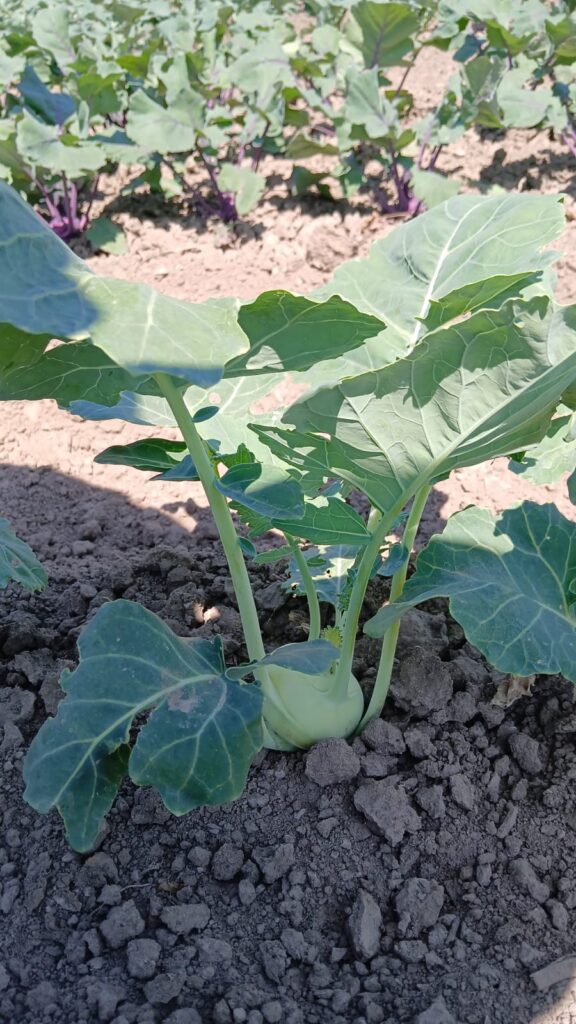
Wow, another full CSA box and June is just around the corner, I mean, the weekend! The weather is very warm and dry, so that means Manuel and the irrigation team are back keeping up with watering/fertilizing the fields. Rafael came back from the field yesterday with this picture (to the right) of Kohlrabi in the field. It won’t be long and we will see those in the CSA boxes too!
Field report is the Basil is looking good, and ready soon. The garlic field looks amazing. Tomorrow, we will receive our sweet potato slips. The crew already has the field prepped and ready to plant in the next few days. The final update – Strawberry Day preparation is underway.