

What’s In The Box with Recipe Suggestions
Asparagus: I know you may be getting too much asparagus this season! We have included it in each box so far this season, that is 5 boxes already. Don’t worry, this week we are winding down our Asparagus harvest. Save the lower portions of the spear that are more tough and use them to make a tasty pot of soup or vegetable broth!
Simple Roasted Asparagus with Balsamic & Parmesan
Roasted Asparagus Soup with Spinach and Sunflower Cream
Cilantro: Remove the twist tie and wash well in a sink of cold water, then shake off excess moisture or use a salad spinner to dry it before use or storage. Use it in salsa, salads, added to soups and curries, blended into pesto or even added to green drinks!
Garlic Scapes: This is the curly, skinny, wild looking green vegetable in this week’s box! They grow out of the center of a hard-neck garlic plant, but we remove them so the plant can focus its energy into making a nice, big bulb. While we used to throw them away, one day we became enlightened and realized they are actually edible and quite flavorful! Use them anywhere you would use bulb garlic.
Asparagus Risotto with Garlic Scapes
Hon Tsai Tai: This is the bunching green with purple stems, green leaves and yellow flowers. All parts of the plant are edible; however, the purple stems can get tough as the plant matures. Taste a little portion of the stem and if it’s tender, chop it up and eat it. If it’s a bit too fibrous to be enjoyable, strip off the leaves and discard the stems.
Savory Miso Oatmeal with Greens & Jammy Egg (substitute hon tsai tai for kale)
Orecchiette with Hot Italian Sausage and Wilted Greens
Lacinato Kale: This variety of kale is also referred to in recipes as Tuscan or Dino Kale. Use it to make a raw kale salad or use it in a simple minestrone soup!
White Bean and Kale Quesadillas with Creamy BBQ Dip
Kohlrabi: Enjoy this week’s first taste of Kohlrabi raw or cooked! After you peel the lower bulb portion, you’ll find tender, crispy, white flesh that is slightly sweet and reminiscent of cabbage. The leafy green tops are also edible and may be substituted in any recipe calling for collards. If you’re not sure what to do with kohlrabi, start by just cutting the bulb into strips and eating it raw with a pinch of salt and chili powder or dipping it into your favorite dressing!
Amazing Coconut Curried Greens (utilizing kale and kohlrabi leaves!)
Mini Red Lettuce: We grow these smaller lettuce varieties in the spring because they fit nicely in the CSA box and have shorter days to maturity. Use these delicate lettuces as a base for a salad or mix them in with kale or spinach for some variety.
Boston Lettuce with Bacon Dressing
Korean Steak and Noodles Lettuce Cups
Potato Onions: Use these as you would green onions or chives.
The Best Egg Salad (with lots of scallions)
Orzo Salad with Scallions, Hazelnuts and Golden Raisins
Pea Vine: Read more about pea vine in last week’s newsletter and recipes. This vegetable is the precursor to peas in the pod! This is a specific variety of peas which does produce some small peas; however, we harvest it before the pods set on and use it as a bunched green.
Green Curry with Pea Vine & Rhubarb
Peking Ta Ching Kou Pai Tsai: This is a new to the farm ‘Chinese broccoli’ type green from Beijing (formerly Peking). It has large, tender, purple-colored leaves that can be used similarly to collards and kale, making them suitable for sautéing, steaming, or incorporating them into soups and salads.
Stir-Fried Asian Collard Greens
Green Top Diana Radishes: These are the purple and white radishes in this week’s box. Don’t forget to eat the radish tops as well. Lightly sauté sliced radishes and toss in the chopped green tops at the end. Stir together with some salt and pepper for a quick and tasty side dish.
Pan-Seared Chicken with Crispy Radish Salad
Turmeric Chicken with Lemon Radish Salad
Rhubarb: This is our final week of rhubarb. Our field did not produce as well as we would have liked. Enjoy this final taste for this season! Use them later to make muffins, pies, sauces, etc. We anticipate strawberries next week, and with luck, basil too!
Strawberry Rhubarb Barbeque Sauce
Goat Cheese Crostini with Rhubarb Chutney
Sauté Mix: The greens in this mix are tender enough to eat as a salad, or you can lightly cook them.
Mixed Green Salad with Creamy Sesame Dressing
Spinach: The leaves are more tender and delicate, perfect for use in fresh salads dressed with a light vinaigrette or a thinner creamy salad dressing.
Creamy Garlic Shrimp with Spinach
Chickpea Spinach Curry
Vegetable Feature: Garlic Scapes
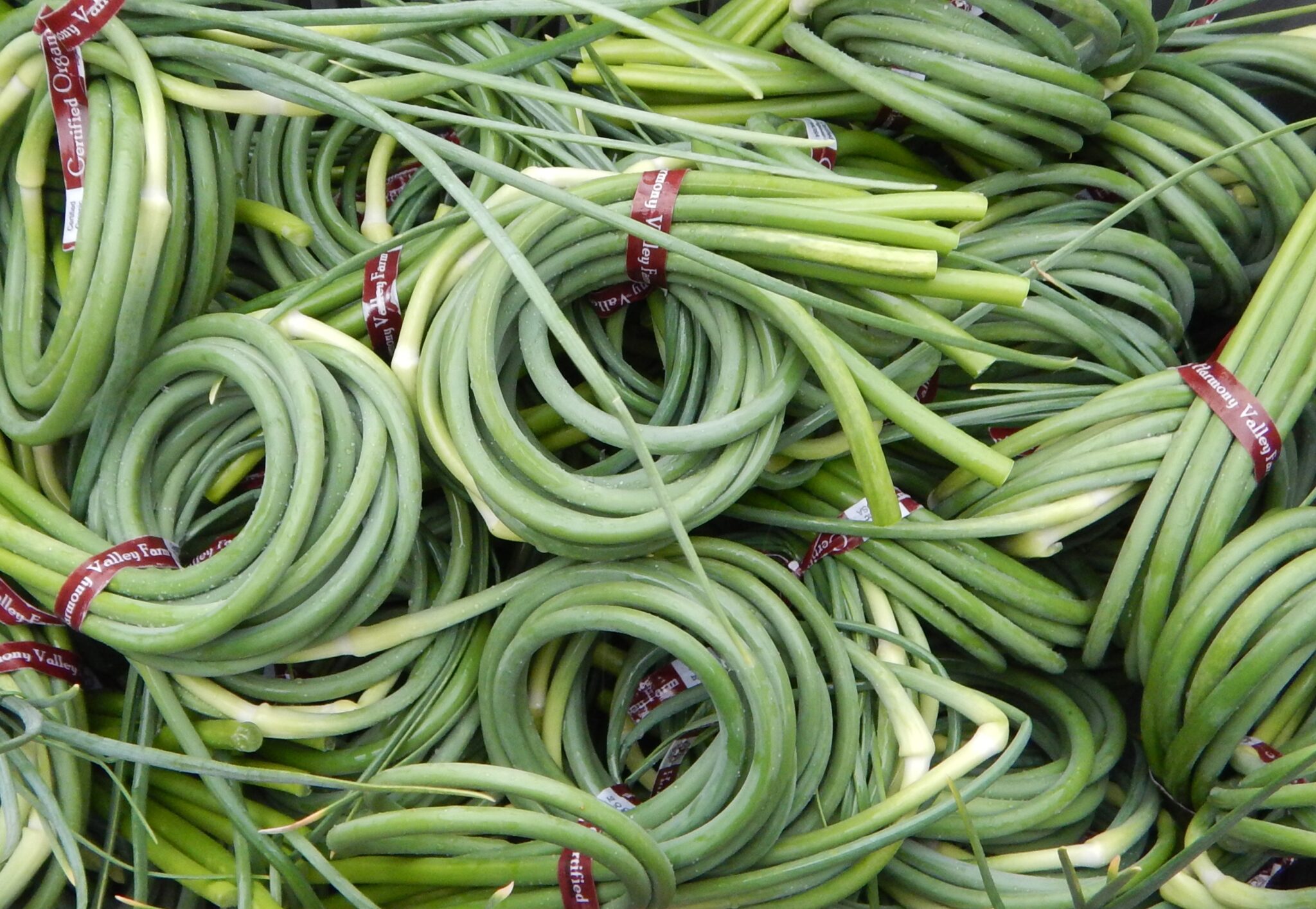
If you are not familiar with garlic scapes, they are easily identifiable. They are green, long, skinny and have a natural curl to them, hence we work with the curl when we bunch them. Nearly the entire scape is edible and is best when harvested while young and tender. You may need to trim off the skinny end near the little bulb at the far end of the scape as this portion is often tough. The remainder of the scape is usable and tender, so they do not need to be peeled. Scapes have a bright, juicy, mild garlic flavor. They may be used in any recipe that calls for garlic cloves, just chop them up and add them as you would with minced garlic. They can also be grilled or roasted, pickled, fermented, and make an awesome pesto! They are a great addition to eggs, stir-fries, pizzas, etc.
Garlic scapes are a byproduct of growing hard-neck garlic. They grow from the center of the plant, and we harvest them in early June, about a month ahead of our annual garlic harvest. Scapes are part of nature’s plan for the plant to propagate itself in the soil. If left unattended, the bulbils on the end of the scape would get bigger and eventually be so heavy as the scape grows out of the center of the plant that it would fall down and plant itself, thereby propagating a new plant! We’re cultivating garlic, so we plant a clove of garlic from a full-sized bulb and use that as a means of growing the plant. Since we don’t need the scape to produce another crop, we go through the field and cut them off from the plant so the plant can focus its energy into producing a nice sized bulb instead of a scape.
Up until the early 90’s we used to remove scapes from the garlic plant and throw them on the ground! We were the first farm in the Midwest to start harvesting the scapes for use as a vegetable, thanks to one of our customers from Korea who asked us to save the garlic scapes for her so she could make pickles. We thought this was odd but saved some for her anyway. She was gracious enough to share a jar of pickled scapes with us and that was our introduction to how delicious they are to eat!
Store scapes in the refrigerator until you are ready to use them. They’ll store for 2-3 weeks. If you’re looking for some interesting ways to use garlic scapes this year, check out this article featured at www.practicalselfreliance.com for a list of 30 tasty garlic scape recipes!
Farm Update

We love this late spring weather, although what farmer is every totally happy with the weather! The fields are happy and the crew has been busy keeping up with the planting, cultivating, and harvesting. We will soon be seeing fennel, zucchini and chard – a shift into the summer crops.
The strawberry field is starting to show us some ripe red berries! We anticipate seeing them in CSA boxes next week! In 2 more weeks, we have our CSA Strawberry day at the farm, so plan a visit. See your email for more details!

One Response
Never too much asparagus!