What’s In The Box with Recipe Suggestions
Arugula: Enjoy this week’s baby arugula, a spicy, peppery green, in salads tossed with oil and vinegar and garnished with nuts, seeds, cheese, fatty meats and/or other stronger flavors. Alternatively, toss some baby arugula with lemon juice and olive oil and use it as a final topping for a freshly baked pizza when you pull it out of the oven!
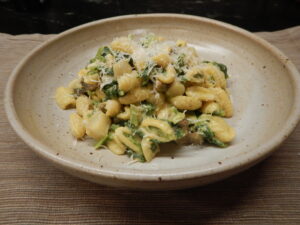
Burdock & Mixed Greens Stir-Fry
Toasted Cheddar, Ham & Arugula Sandwich
Asparagus: We’re having a phenomenal asparagus harvest this week, hence there is not one but two bunches (1# each) of asparagus in this week’s box. Store it in the refrigerator with the base in a glass of water or wrapped in a moist towel to keep it fresh.
30 Minute Dinners for People Who Love Asparagus
50 Asparagus Recipes That Celebrate Spring
Baby Bok Choi: Prepare bok choi in a way similar to head lettuce. Separate the individual leaves from the base of the plant and wash well in cold water before using them. Both the green leaves and the thicker white base of the stems are edible and may be eaten raw in salads or cooked!
Baby Bok Choi Salad with Sesame Dressing
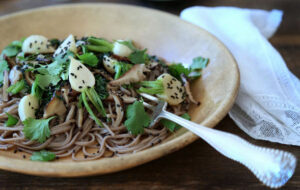
Soba Noodles with Mushrooms & Bok Choi
Burdock Root: Burdock is the long, slender brown root vegetable that is packaged in a plastic bag with a red background. It has been used in traditional Chinese medicine for centuries where it is thought to have important health benefits as a blood and liver purifier in addition to use as a digestive aid and it’s beneficial for treating skin disorders. Along with the HVF recipes that are listed below, there are also two recipes on the back of the bag the burdock is packed in this week.
Blossoming Chives: The chives continue to grow and change each week. This week they have more mature flowers, which are also edible and have a bright onion flavor! They make a nice addition to salads or use them as garnish for soup or other dishes.
Cheddar Cheese & Chives Popovers
Green Garlic: Green garlic has a fresh, bright garlic flavor and may be used in place of garlic cloves in recipes. Nearly the entire plant is edible including the green tops. Green garlic has flat leaves/green tops while green onions or scallions have round tops. Use it anywhere you would use a clove of garlic. Store in a plastic bag in your vegetable drawer.
Quinoa Salad with Asparagus, Arugula and Citrus
Herb Roasted Chicken with Asparagus & Green Garlic
Potato Onions: This is a multiplier onion that we plant in the fall from “sets” and harvest in the spring as one of our earliest green onion varieties. These have rounded tops, unlike the green garlic that has flat leaves. Use both the green tops and the lower portion of the onion.
Smoked Salmon Dip with Green Onions
Grilled Steak with Scallion Ginger Sauce
Overwintered Parsnips: While we harvest most of our parsnips in the fall, we always leave some in the field over the winter and dig them in the spring. One way they are able to survive the winter is by increasing natural sugars which act as antifreeze. The side benefit of this adaptation is they are super sweet and delicious! These parsnips may have small browning spots on them, but don’t worry, those blemishes are only skin deep.
Savory Bread Pudding with Parsnips
Hearty One-Bowl Parsnip Muffins
Red Radishes: Most people look at a bunch of radishes and only see the radish as the edible portion. However, the leaves on the radish are also edible and are packed with valuable nutrients, so don’t throw them away! Use them to make a Radish Top Pestoor add them to a vegetable stir-fry this week.
Fresh Radishes with 3 Compound Butters
Salad Mix: Salad mix is a beautiful blend of baby lettuce and greens. It’s a delicate item and will have the longest shelf life if you keep it cold! It is full of delicate greens, so best to serve with a light dressing. Use it as the base to make a quick entrée salad for dinner topped with leftover chunks of roasted chicken or cooked chickpeas. It’s one of nature’s many fast foods!
Spring Salad with Rhubarb Vinaigrette
Spinach: This is the first of our spring planted spinach. The leaves are more tender and delicate, perfect for use in fresh salads dressed with a light vinaigrette or a thinner creamy salad dressing.
Easy Spinach Salad with Balsamic Vinaigrette and a Lot of Variations!
Bacon, Spinach and Green Onion Cream Cheese Tortilla Roll-Ups
Baby White Turnips: These little turnips are also known as “salad” or “hakurei” turnips. You’ll find them to be tender, sweet and do not need to be peeled. The greens are also edible and may be used in salads or wilted down in soups, stir-fry, soup, etc. One simple way to prepare them is to lightly sauté the turnips in butter, then cut the greens into bite-sized pieces and wilt them on top. Add a little salt and pepper and you’re done.
Sesame Ginger Turnip Rice Bowls
Turnip Salad with Herbs, Yogurt & Poppy Seeds
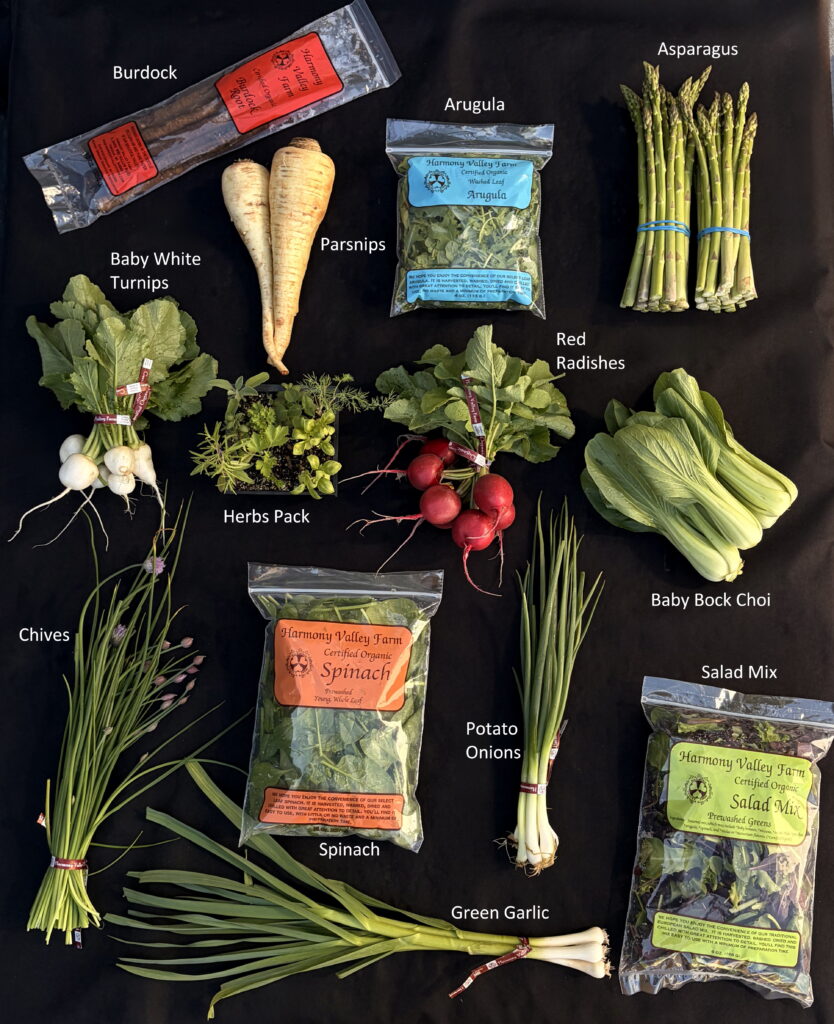
CHOICE Herb Packs: This week we have sent a garden herb pack for each vegetable share, not per sharing household. Please see the diagram of the herb packs below and on our website so you can identify the herbs in your pack.
Vegetable Feature: Baby White Turnips

Baby white turnips are a classy little vegetable we often describe as being “pristine.” They are classified as a salad turnip and are tender with a sweet, mild flavor. Both the roots and the green tops of baby white turnips are edible and may be eaten raw or lightly cooked. We plant baby white turnips for harvest early in the spring and again in the fall when the growing conditions are cooler. They are intended to be harvested when they are still small and tender. The other turnips we grow in the fall are meant for storage purposes and have thicker skin compared to the thin skin of a salad turnip. Baby white turnips also mature much faster than beets, carrots, and fennel, etc. so they are a very important part of our spring menus until the other root vegetables are ready for harvest.
To prepare baby white turnips for use, separate the roots from the greens and wash both well to remove any dirt. Salad turnips have such a thin exterior layer, they do not need to be peeled. They are delicious when eaten raw in a salad or just munch on them like an apple! You can also cook these turnips but remember to keep the cooking time short as it doesn’t take much to cook them to fork tender. You can simply sauté them in butter, stir-fry or roast them. The greens may be added to raw salads or lightly sauté or wilt them in a little butter.
To prolong the shelf life, separate the greens from the roots with a knife and store them separately in plastic bags in your refrigerator.
Farm Update
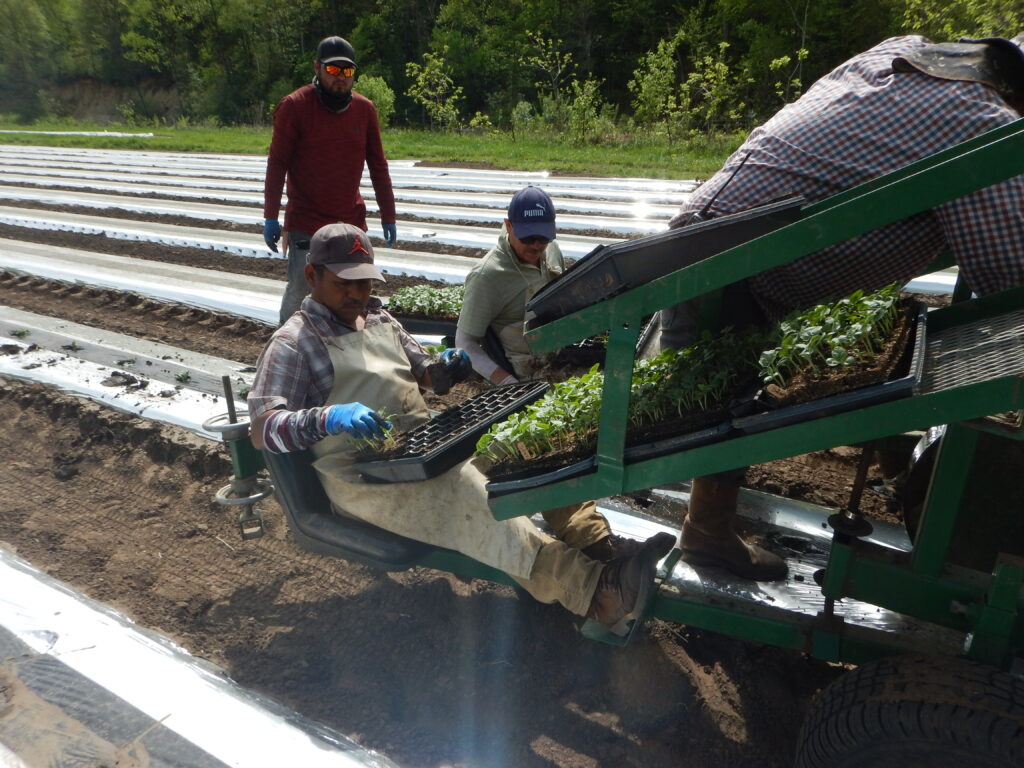
Well, the mini drought has ended, and we actually received some much-needed rain. Both the plants and the irrigation crew are less stressed and much happier this week! The transplanting crews will be busy the rest of this week. They will be transplanting the melons, watermelons and the fourth planting of broccoli to their summer field home. The seed planting crews will also be busy with sweet corn, carrots and edamame.
And if that isn’t enough going on, we are working out some of the details for the Strawberry Day event, June 20th on the farm. Rafael and Richard are scouting out the best fields for the wagon tour and Jimena and Kelly are planning out the pre-and-post wagon tour details. We hope to send the email invite out to members this week!