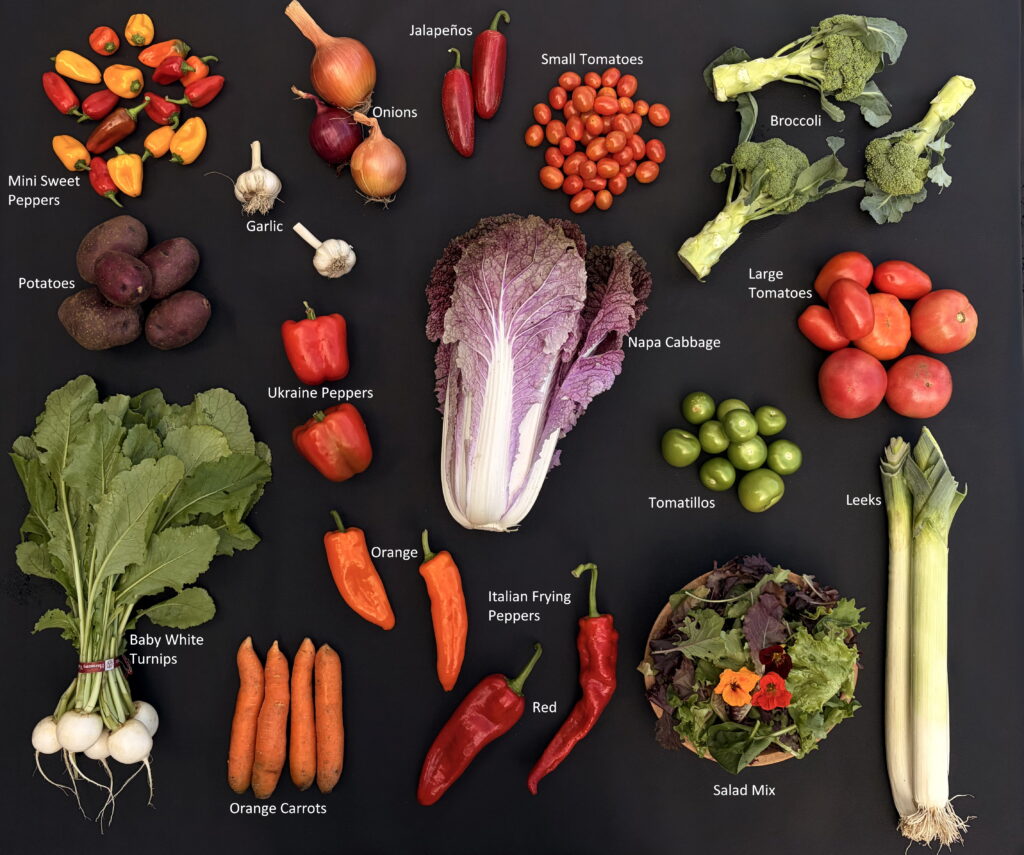
What’s In The Box with Recipe Suggestions
Red Napa Cabbage: We like this beautiful variety with its crinkly leaves and vibrant colors. It can be used raw in salads or lightly cooked such as in a stir-fry. You could also ferment them as a means of preservation!
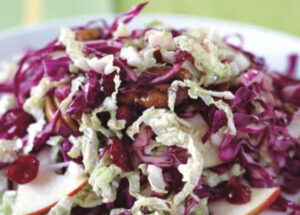
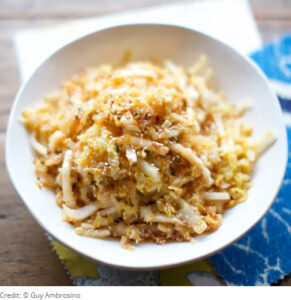
Simple Napa Cabbage Slaw
Farm Fresh Ranch Cole Slaw
Cauliflower or Broccoli or Broccoli Romanesco: Your box will contain one of these selections from the brassica family. We are currently harvesting from both of our “fall” plantings of cauliflower and Romanesco. Our fall broccoli plantings are just starting to head up, but it looks like we’re going to have strong production this fall! Get ready for more broccoli next week!
Garlic Parmesan Roasted Cauliflower
Curried Cauliflower & Chickpea Salad with Yogurt
Roasted Cauliflower & Garlic Rigatoni
Orange Carrots: A staple item in our Midwestern diets, carrots will sustain us well into the winter.
Carrot Ginger Soup with Crispy Shallots
Italian Garlic: As we enter soup and stew season, include plenty of garlic in your base mix of aromatics. Alongside onions, celery/celeriac and carrots, garlic helps to build flavor as well as contributes valuable compounds to support the immune system!
Silky Roasted Zucchini Sauce with Garlic and Sweet Peppers
Leeks: Remember to wash your leeks well before using them, and not just on the exterior. Dirt can get in between the layers on the white shank due to the process of hilling them. Cut the leeks into pieces of your preference, put them in a colander and rinse them well. Shake off all the excess water and use it for whatever purpose you have in mind!
Potato Leek Soup with Poblanos and Crispy Bacon
Red and Yellow Onions: Onions contain valuable compounds and antioxidants that support health and wellness in pretty much every system of the body! Incorporating them in your meals daily can help support your overall health.
Caramelized Onion & Broccoli Quiche
Red Jalapeños: There are two jalapeño peppers in your box, so make sure you locate it! If you are not a fan of hot peppers, feel free to deposit your pepper in the swap box and share it with another member. Of course, you can always adjust the amount of heat from the pepper simply by using only the amount that is to your liking and/or by removing the white ribs and seeds which is where most of the heat is.
Chickpea Fritters with Jalapeño Raspberry Sauce
Mini Sweets Peppers: There is a half-pound portion of these sweet mini bell peppers in this week’s box. These are the perfect grab-n-go snacks as they need no prep! They are also great for roasting and stuffing with fillings of your choice.
Sweet Pepper & Cheddar Claufoutis
Sheet Pan Roasted Chicken with Potatoes & Mini Sweet Peppers
Orange and Red Italian Frying Peppers: These red and orange peppers have a long slender shape and are sweet peppers. We find they have more flavor than most colored bells, however you may use them in any recipe calling for bell peppers or sweet peppers. Store them in the warmer part of your refrigerator or at room temperature. If they start to get a little soft or wrinkled, they are still good! Use them in a soup or stew or roast them.
Penne Pasta with Roasted Peppers & Almonds
Ukraine Pepper: Ukrainian peppers are a unique variety resembling traditional bell peppers; they offer a versatile flavor ranging from mild and sweet to slightly spicy, depending on the specific variety and stage of ripeness. You can easily use them as a direct substitute in any recipe calling for conventional bell peppers.
Red Pepper, Lentil & Tomato Salad
Peter Wilcox or Purple Viking Potatoes: Peter Wilcox is one of our favorite potato varieties because it was bred for nutrient density. Nutrients contribute to our health, but they also contribute to flavor making this one of the most flavorful potatoes we grow! This is a waxy potato best suited to pan-frying, roasting or for using in soups and stews. Purple Viking potatoes are our favorite variety for mashed potatoes with their white flesh and slightly starchy texture. This variety is actually an all-purpose type of potato, adapting well to mashed potatoes while also being a great option for roasting and soups. The skin is purple with splashes of pink while the flesh inside is pure white.
Honey Mustard Warm Roasted Potato Salad – Peter Wilcox
Loaded Baked Potato Soup – Purple Viking
Salad Mix: Fall is our preferred time of the year to grow these delicate salad greens. This mix is a flavorful blend of spicy Asian greens mixed with several different varieties of lettuce. The key to longer shelf life is to keep the bag refrigerated.
Mixed Green Salad with Goat Cheese, Maple Glazed Pecans and Maple Dijon Vinaigrette
Tomatillos: We are nearing the end of tomatillos season and wanted to include these in your box one more time! You may notice the outer husk may not look pretty, but underneath that outer shell is a wonderful, flavorful tomatillo. So, remove the husk and discard, then use the fruit inside!
Roasted Salsa Verde Chicken Nachos
Small Tomatoes: Use these little gems whole on skewers, either cooked or raw. For a grilled version, alternate these tomatoes along with meat of your choosing, chunks of onions, sweet peppers and zucchini. For an option that does not require cooking, skewer red grape tomatoes with fresh mozzarella, prosciutto and basil!
Variety of Tomatoes: We are hoping to get one, maybe two more weeks out of tomato season. Per usual, ripen your tomatoes at room temperature and give them a little attention every day, looking for any early signs of deterioration. If you see a small spot starting to form, use that tomato right away and just cut away that portion.
Tomato Soup with Cheesy Crostini
17 Ways To Build a Better Tomato Sandwich
Baby White Turnips: These mild, tender salad turnips are two vegetables in one! Both the tender roots and the green tops may be eaten raw or lightly cooked. Enjoy them in salads, stir-fry, roasted or simply sautéed.
Vegetable Feature: Napa Cabbage
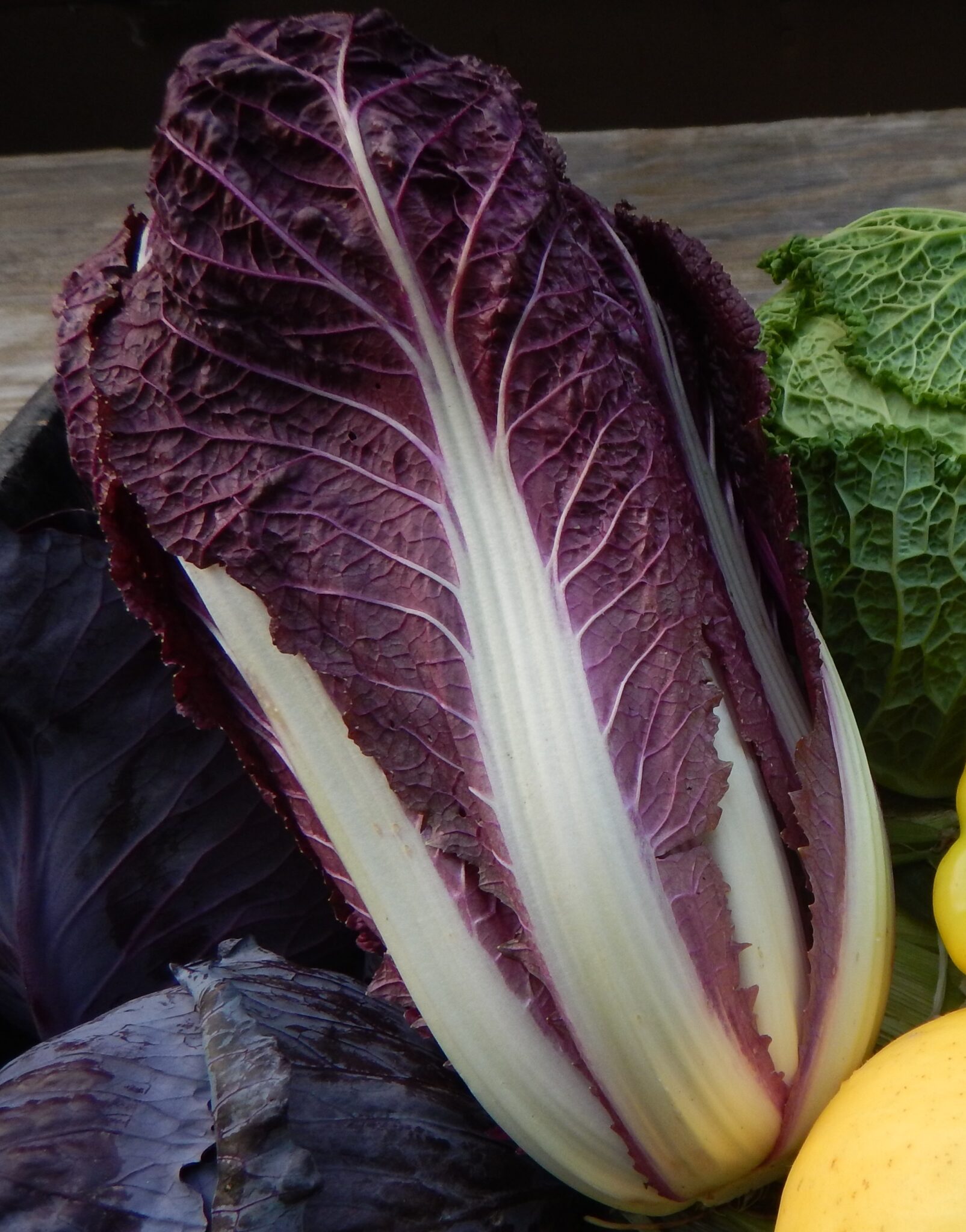
As we get closer to the end of summer and the official transition into fall, we’re starting to see a shift in some of the crops coming in from the fields. This week we are harvesting what we intended to be our “fall cabbages,” but planning when fall crops will be harvested is a challenge. Why? Because we never know what kind of weather or temperatures, we’re going to get in mid to late summer! Nonetheless, we’re happy to have these beautiful cabbages to share with you this week. They are a nice crop to help us transition from summer to fall as they pair nicely with late summer vegetables as well as winter crops. This week your box will contain one Red Napa Cabbage.
While it’s called “Red” napa cabbage, it really is more of a vibrant pinkish-purple color that is quite stunning against its pure white ribs. Red napa cabbage is a relatively new vegetable, having been released onto the commercial market in 2016. Its development may be credited to Kwonnong Seed company which is based in Korea. Given napa cabbage is the traditional cabbage used to make kimchi, a Korean fermented vegetable preparation, it makes sense that a Korean seed company would invest in diversifying this crop. This vegetable is also used in other countries throughout Asia where it is considered to be a staple vegetable. According to cookbook author and chef, Fuchsia Dunlop, napa cabbage is referred to as “Chinese Leaf Cabbage” in China. She cites napa cabbage as one of the most important vegetables in northern regions of China where it is stir-fried, pickled, added to fillings for dumplings as well as using it in soups and stews. In Japan, napa cabbage is called hakusai and is something nearly every family that grows their own food will have in their garden.
Napa cabbage is a little different than other varieties of cabbage. The heads grow upright and are more cylindrical in shape. The upper portion of the cabbage leaf is crinkly while the lower portion of the leaf has a wide, white rib. Fuchsia describes napa cabbage as having crinkly leaves like a head of savoyed cabbage, but with a crunchy bite more like head lettuce! Both the leaf and the ribs are edible and the combination of textures from the two may be described as crunchy, crisp, and juicy! Napa cabbage has a higher water content than some other cabbages. It is also more sensitive to the effects of salt, acidity from vinegar or citrus, and heat which all breaks down the cell structure of the cabbage and release water. When cooking napa cabbage, plan accordingly and know that it will only take a few minutes to cook if you want it to retain a little bit of crunch. If you are using napa cabbage in its raw form to make a salad or a slaw, I recommend mixing it with any vinaigrette, dressing or sauce shortly before serving. This will diminish the chance of the salad becoming soggy.
Napa cabbage pairs well with a wide variety of vegetables including sweet & hot peppers, onions, carrots, garlic, ginger, and herbs such as cilantro, basil, and mint. Napa cabbage is also often paired with citrus fruits including mandarins, oranges, limes, and yuzu (for which you may substitute a Meyer lemon). Other ingredients often used alongside napa cabbage include sesame seeds and oil, peanuts, cashews, soy sauce and fish sauce.
We also grow Green Savoy Cabbage which we hope you will be seeing later this season. While many growers choose to grow “kraut cabbage” which is the standard smooth, green cabbage, we choose to grow savoy cabbage. The term savoy refers to the ruffled leaves which we think are beautiful! We also like this type of cabbage because it has more texture when eaten raw or cooked. Cabbage has long been known as a staple vegetable necessary for surviving a long winter in cold climates. It stores well and has a wide variety of uses.
Green savoy cabbage may be eaten raw or cooked. In the raw form, use this cabbage to make a traditional creamy coleslaw along with carrots and/or other root vegetables such as celeriac. You can also use this cabbage to create some main dish salads. You can also use this cabbage to make a quick pickled salad or shred it, salt it and turn it into a simple slaw to eat with tacos. Green savoy cabbage may also be cooked. You can add it to soup or use it to make Beet Borscht. I also like to use this cabbage in stir-fries over the winter. Combine it with beauty heart radishes, thinly sliced turnips, carrots and onions to make a delicious winter vegetable stir-fry served with rice.
Store cabbage in the refrigerator, loosely wrapped in a plastic bag to prevent it from wilting or getting soft. For optimal results, use within 1-2 weeks of receiving it.