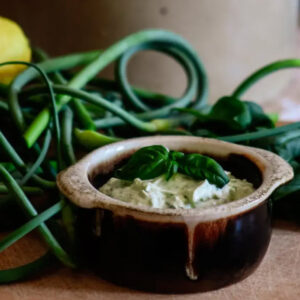


The best way to store basil is like flowers in a vase, wrapped in plastic and kept in the refrigerator. The basil will remain fresh for up to a week with this method. If you are short on fridge space, the next best thing is to wrap the leaves in either a paper or kitchen towel and place the towel in a plastic bag, much like you would with other greens. If you do have more basil than you can use fresh, preserve it! Basil can be pureed with a little oil and frozen in ice cube trays or muffin tins.
Italian Basil, also known as sweet basil or Genovese basil, is the most common type of basil available, and is the type we chose to grow. Basil is an annual plant that grows, depending on the variety, between 16 and 30 inches tall. The leaves of the varieties we grow are smooth, green, egg-shaped, and range between 2 and 3 inches long.
Basil leaves are the part of the plant primarily used for cooking. Pesto is a great example of a traditional fresh basil preparation. The Italian Caprese salad highlights many of the ingredients basil pairs well with: fresh tomatoes, fresh mozzarella and a little olive oil. Basil also pairs well with onions, garlic, olives, eggplant, zucchini, chicken, lamb, pork, seafood, fish, and other herbs like oregano, savory, rosemary and sage.
Before using basil, rinse under running water, pat dry, and remove the stems. Add basil at the end of the cooking process for the best flavor.
Growing Information: Italian basil needs to be cut back regularly to delay flower and seed formation so it continues to produce usable leaves. If you see even the earliest sign of flowering, cut it back to keep it vegetative. If you can’t use your basil as fast as it is growing, cut the extra leaves anyway and preserve them. When harvesting your basil, use a sharp knife or scissors so you can make a clean cut.
We use cookies to improve your experience on our site. By using our site, you consent to cookies.
Manage your cookie preferences below:
Essential cookies enable basic functions and are necessary for the proper function of the website.
Google reCAPTCHA helps protect websites from spam and abuse by verifying user interactions through challenges.
Marketing cookies are used to follow visitors to websites. The intention is to show ads that are relevant and engaging to the individual user.
Google Maps is a web mapping service providing satellite imagery, real-time navigation, and location-based information.
Service URL: policies.google.com (opens in a new window)
You can find more information in our Privacy Policy and Privacy Policy.