Cauliflower will keep in the refrigerator up to 2 weeks when it is wrapped loosely in plastic. Adding a paper towel in the bag to suck up extra moisture will also help keep it fresh. If you would like to store it longer, you can blanch then freeze the florets for up to a year.
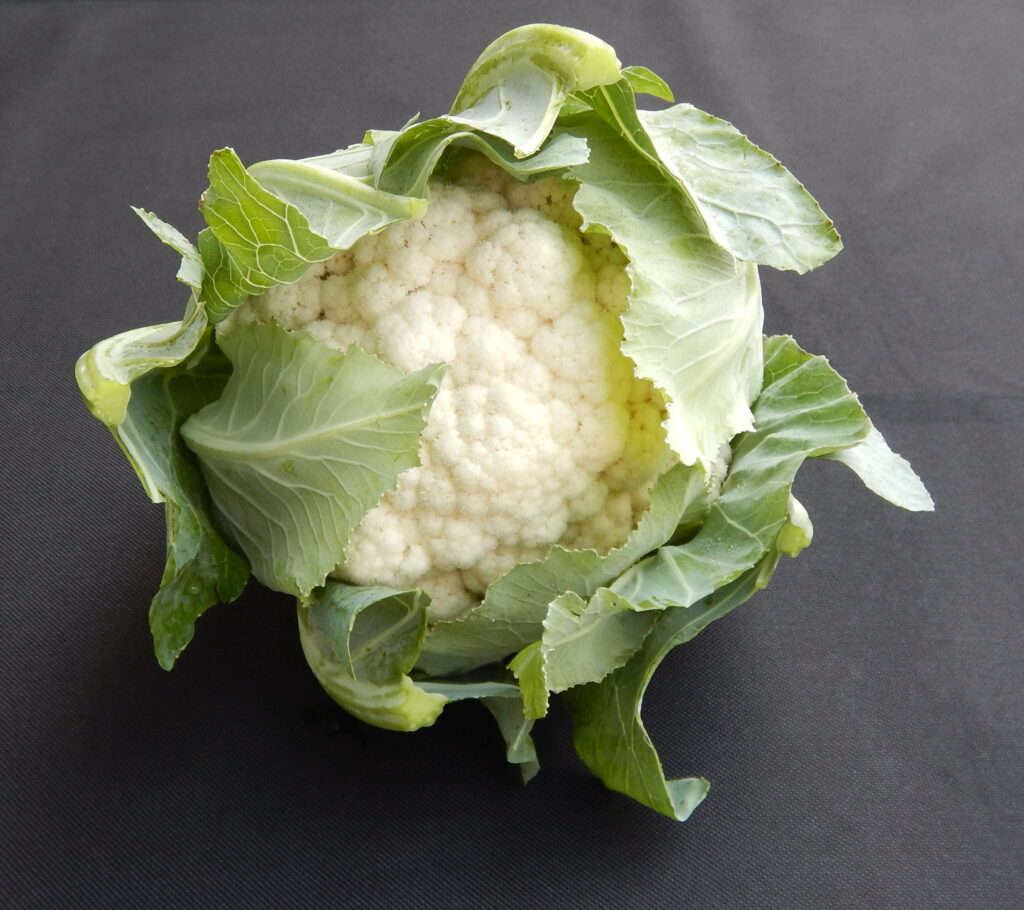
Cauliflower is one of the many Brassicas we grow at Harmony Valley Farm, including cabbage, broccoli, Brussels sprouts, and kale. Cauliflower plants look very similar to cabbage in the field, until the familiar cloud-like head forms. We grow white, purple and yellow cauliflower at Harmony Valley Farm, but there are a variety of other colors grown world-wide, including green and brown!
Cauliflower heads are a very versatile vegetable. Cauliflower’s leaves and core are also edible. The leaves are a great addition to soups or stir-fries. The core has the same flavor as the florets and can be used in the same way. Once you have the cauliflower cut into florets and pieces, rinse them in a colander, then pat dry with a paper towel or clean kitchen towel before cooking. Cauliflower can be eaten raw and almost every possible way imaginable cooked, such as steamed, boiled, sautéed, roasted, grilled, fried, or pickled. It has become increasingly popular to turn cauliflower into rice and flour as a low-calorie, gluten-free alternative. Cauliflower can even be mashed to make a great substitute for potatoes!
Health & Nutrition: As a cruciferous vegetable, like the rest of the Brassica family, cauliflower has many health benefits. It has a good amount of antioxidants, which can help prevent cancer. Cauliflower’s a great source of vitamin K as well, which helps with calcium absorption, thus promotes healthy bones. It also may have anti-inflammatory properties, which can also lower the risk of diseases like cancer, diabetes, and cardiovascular disease.
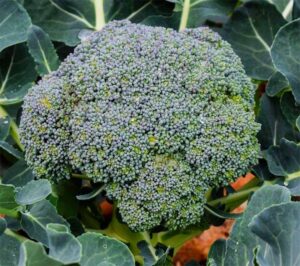
Additional Fun Facts: In Great Britain and southern Italy, there is a vegetable commonly called purple cauliflower, which it is actually a type of broccoli. The purple cauliflower that we grow is truly cauliflower with a purple head.
Cauliflower gets its name from a Latin word meaning “flowers of cabbage.”
We use cookies to improve your experience on our site. By using our site, you consent to cookies.
Manage your cookie preferences below:
Essential cookies enable basic functions and are necessary for the proper function of the website.
Google reCAPTCHA helps protect websites from spam and abuse by verifying user interactions through challenges.
Marketing cookies are used to follow visitors to websites. The intention is to show ads that are relevant and engaging to the individual user.
Google Maps is a web mapping service providing satellite imagery, real-time navigation, and location-based information.
Service URL: policies.google.com (opens in a new window)
You can find more information in our Privacy Policy and Privacy Policy.